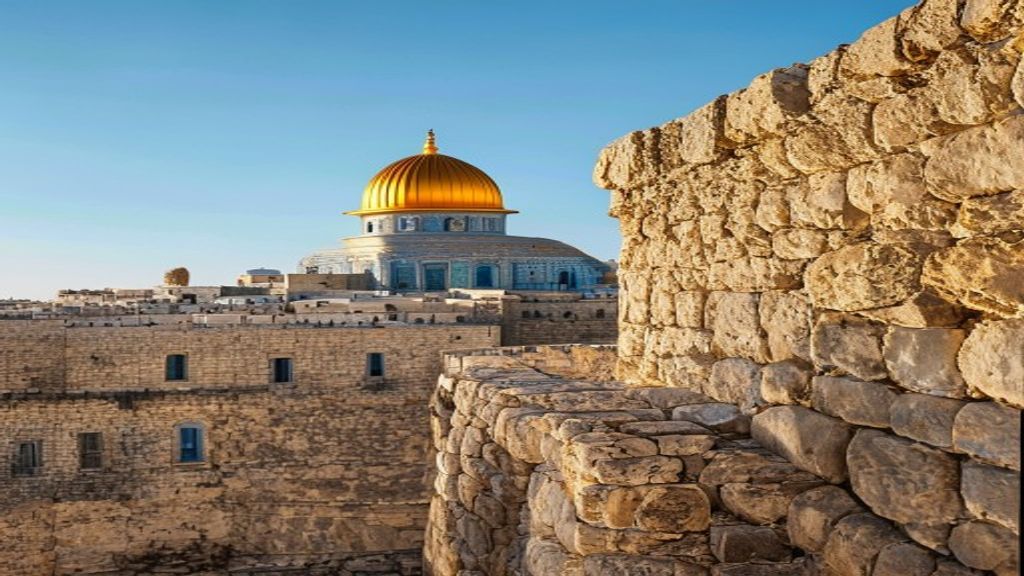
Israeli National Security Minister Itamar Ben-Gvir made a high-profile visit to the Temple Mount in Jerusalem, using the occasion to call for expanded access for Jewish worshippers at the site. According to The Jerusalem Post, Ben-Gvir criticized current wartime restrictions — linked to the ongoing conflict with Iran — that have limited the number of worshippers permitted on the mount. He also took aim at the Israeli High Court’s decision to approve larger protest gatherings, contrasting that ruling with the continued limits placed on religious visitors to one of Judaism’s most sacred sites.
The Temple Mount: A Site of Enduring Significance
The Temple Mount, known in Hebrew as Har HaBayit, is the location of the First and Second Temples of ancient Israel and remains the holiest site in Judaism. It is also home to the Al-Aqsa Mosque complex, making it one of the most contested pieces of land on earth. Tensions over access, sovereignty, and religious rights at the site have been a recurring flashpoint in the Israeli-Palestinian conflict for decades.
Ben-Gvir, a long-time advocate for expanded Jewish prayer rights on the Temple Mount, has made visits to the site a signature political act throughout his tenure. His latest visit comes at a particularly sensitive moment, with Israel engaged in a broader regional confrontation involving Iran.
Biblical Context: Jerusalem and the Nations
Scripture speaks extensively about Jerusalem’s role in God’s redemptive plan. The prophet Isaiah wrote of a future in which the Temple Mount would be a place of prayer for all peoples:
“For my house will be called a house of prayer for all nations.” — Isaiah 56:7
The psalmist also declared the enduring centrality of Jerusalem to God’s purposes:
“Pray for the peace of Jerusalem: May those who love you be secure.” — Psalm 122:6
These passages remind believers that the city and its sacred spaces carry weight not merely in geopolitical terms, but in the long arc of biblical history and promise.
A Prophetic Perspective
From a biblical worldview perspective, many believers note that increased attention to the Temple Mount — its access, its governance, and its future — aligns with a broader pattern of Scripture pointing to Jerusalem as a focal point of end-times events. Zechariah 12:2–3 describes Jerusalem becoming “a cup that sends all the surrounding peoples reeling” and “an immovable rock for all the nations.”
It is important to stress that connecting current events to biblical prophecy requires humility and care. No single political visit or policy debate “proves” a prophetic timeline. However, thoughtful believers can observe that the ongoing struggle over the Temple Mount — who prays there, who governs it, and under what conditions — reflects the deep spiritual and historical significance the Bible assigns to this location.
A Call to Prayer
Whatever one’s view of Ben-Gvir’s politics or the specific policy questions involved, Christians and people of faith are called to pray for Jerusalem, for wisdom among its leaders, and for the peace that only God can ultimately provide. The tensions surrounding the Temple Mount are a reminder that the story of this city is far from over — and that it remains, as it has for millennia, at the center of the world’s attention.