Editor’s note: This article reflects reports available on October 4, 2026. Flood conditions and casualty figures can change as emergency services continue their work. We should not interpret a natural disaster as proof that particular people are being judged by God.
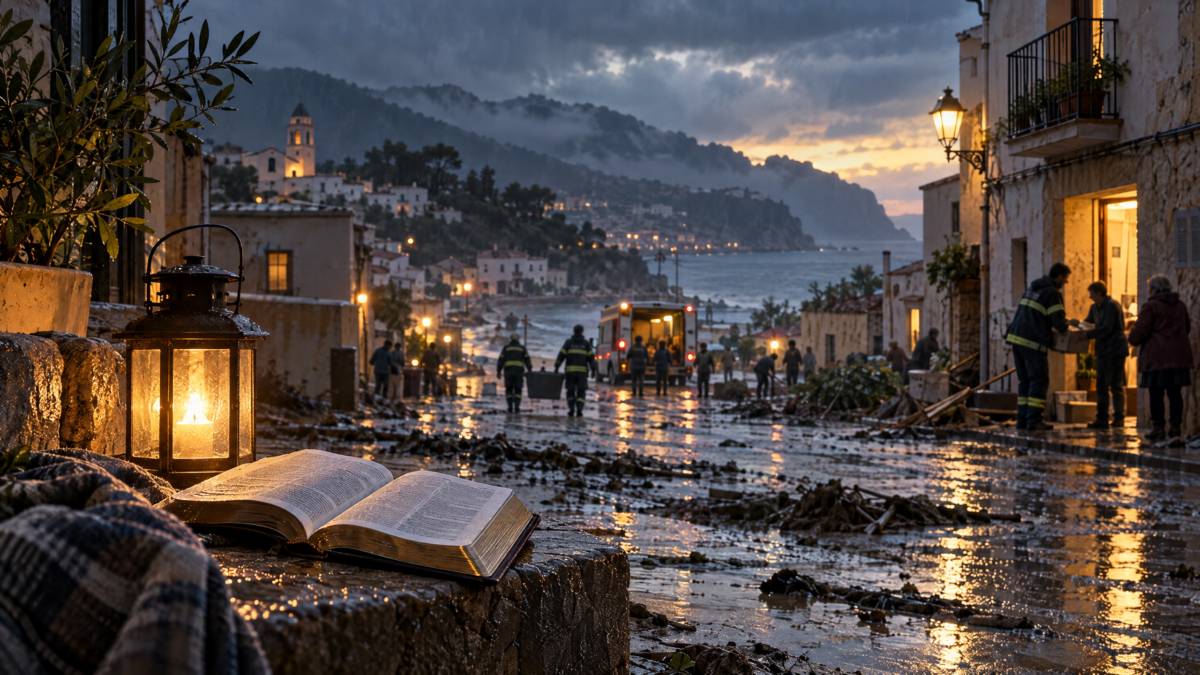
Heavy rains and flooding in Spain’s Catalonia region have killed two people, while emergency services were searching for another person reported missing, according to Reuters citing Catalan authorities and firefighters. A red alert was issued, homes and roads were flooded, and transport and public events were disrupted as officials warned of further severe weather.
Events like this can leave communities frightened and grieving. They also raise spiritual questions: How should Christians respond when ordinary places become dangerous? What does the Bible say about suffering, practical compassion, and hope?
What is happening in Catalonia?
Reuters reported that one man died after a wall collapsed in Tordera, north of Barcelona, and another person died in Montornès del Vallès. Emergency services were searching for someone missing in Pineda de Mar. Authorities urged people to remain indoors during the highest-risk period, while flooding affected homes, roads, trains, flights, shops, sporting events, and cultural performances.
These facts matter because careful reporting helps people prepare and helps outsiders understand the human cost without exaggeration. Christian concern should begin with truth, not speculation.
1. Lament is a biblical response to disaster
The Bible does not tell grieving people to hide their fear or pretend that loss is small. The Psalms openly describe confusion, sorrow, danger, and cries for help. Psalm 46:1 says, “God is our refuge and strength, a very present help in trouble.” That is not a denial of trouble. It is a declaration that God is present within it.
When flooding takes lives or forces families from their homes, Christians can lament with those who lament (Romans 12:15). We do not need to produce a neat explanation for every tragedy. We can grieve honestly while trusting that God sees what communities endure.
2. Compassion becomes practical in an emergency
Jesus’ parable of the Good Samaritan shows that love of neighbor is expressed through concrete action (Luke 10:25–37). In a flood, that may look like following evacuation guidance, checking on vulnerable neighbors, offering shelter, supporting emergency workers, or giving to trustworthy relief efforts.
Galatians 6:2 calls believers to “bear one another’s burdens.” This includes emotional burdens as well as physical ones. Survivors may need time, listening, medical care, financial help, and patient community support long after news coverage ends.
3. Wisdom and preparation are part of faithful living
Proverbs 22:3 says that the prudent see danger and take refuge. That principle applies to severe-weather warnings. Paying attention to official alerts, moving away from floodwater, preparing essential supplies, and helping children and older adults reach safety are not signs of weak faith. They are forms of responsible stewardship.
Jesus also uses the image of wise preparation in Matthew 7:24–27, contrasting a house built on rock with one built on sand. The passage is primarily about hearing and obeying His words, but it reminds us that foundations and preparation matter when storms come—both physically and spiritually.
4. We should reject careless spiritual explanations
After tragedies, people sometimes claim to know exactly why God allowed a particular event or suggest that victims deserved what happened. Jesus rejected that kind of simplistic reasoning when people asked about Galileans killed by Pilate and those who died when the tower of Siloam fell (Luke 13:1–5).
His response does not make suffering meaningless. It warns us not to use another person’s pain as an opportunity for arrogant judgment. We should be humble, compassionate, and ready to help.
5. Hope does not erase grief
Christian hope is not a promise that every storm will end without loss. It is the confidence that suffering and death do not have the final word. Romans 8 describes creation as groaning while it waits for renewal, and Revelation 21:4 promises a future in which God will wipe away every tear.
That hope gives Christians strength to serve now. Because we believe God cares about restoration, we can care for damaged neighborhoods, displaced families, grieving relatives, and exhausted responders without surrendering to despair.
How Christians can respond to the Catalonia floods
- Pray for the bereaved: Remember the families of those who died, the missing person, and everyone affected.
- Follow safety guidance: Take official warnings seriously and avoid dangerous floodwater.
- Help practically: Support reputable local relief groups and check on neighbors who may need assistance.
- Share verified information: Avoid rumors, graphic images, and claims that turn suffering into spiritual speculation.
- Stay present: Continue caring after the immediate emergency and media attention have passed.
Conclusion
The Catalonia floods remind us how quickly familiar places can become unsafe. Scripture calls Christians to lament honestly, act wisely, love neighbors practically, and refuse to condemn victims with explanations God has not given us. In the midst of loss, we can pray for mercy, support those who are suffering, and hold to the hope that God is a refuge in trouble and will one day make all things new.