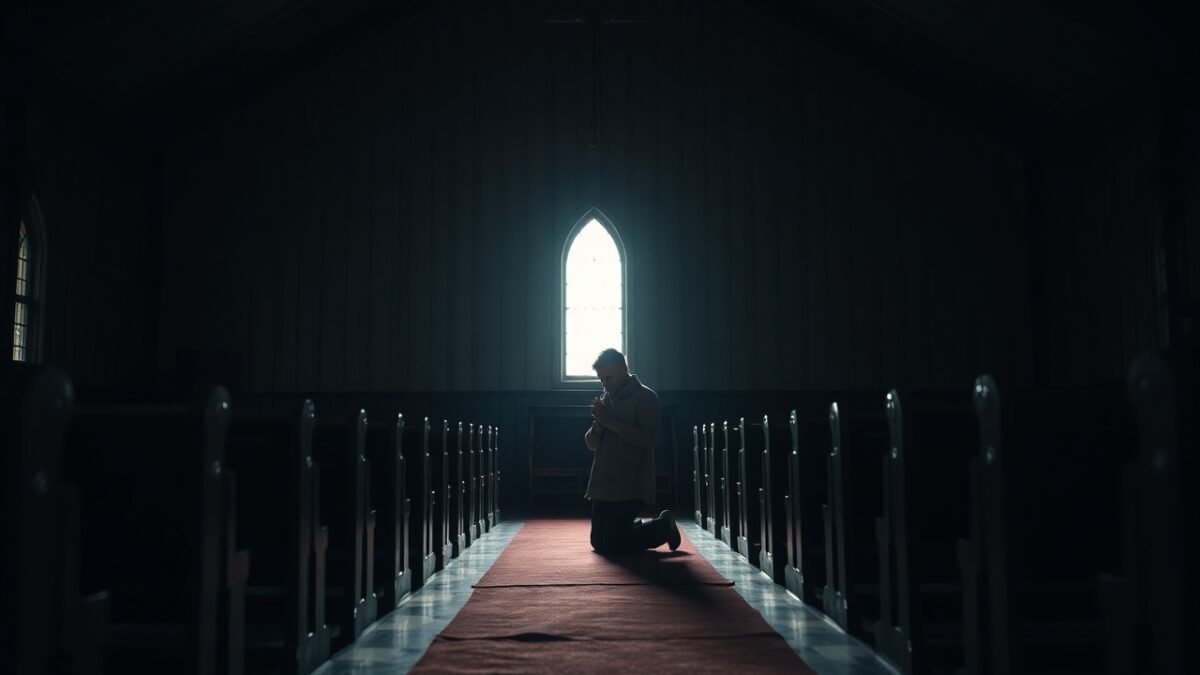
There is a moment most of us have imagined at least once: standing before a crowd, receiving an honor that says, your life mattered, your work was worthy. That longing is not trivial. It is woven into the fabric of what it means to be human—creatures made in the image of a God who declares things good, who names, who blesses. The desire to be seen and commended is real. But Scripture asks a piercing question of every believer: seen by whom, and for what?
A recent reflection from Tabletalk Magazine uses the excitement surrounding a Nobel Prize in Literature as a launching point for a deeper inquiry into Christian faithfulness and eternal reward. Read the source article for the full meditation. The question it raises is one every disciple must sit with honestly: Is the approval of Christ truly more precious to us than the highest honors this world can offer?
The Human Condition: Glory-Seekers Aimed at the Wrong Target
The Bible does not pretend that the desire for glory is sinful in itself. God created us for glory—His glory, reflected through us. But the fall twisted that desire inward and downward. We began to seek glory for ourselves, from one another, measured by the standards of a world that is passing away. The prophet Jeremiah captured the tragedy plainly:
“My people have committed two evils: they have forsaken me, the fountain of living waters, and hewed out cisterns for themselves, broken cisterns that can hold no water.” (Jeremiah 2:13, ESV)
Every earthly prize—every Nobel, every promotion, every standing ovation—is, at its best, a beautiful but cracked cistern. It holds something real for a season, then leaks. Paul diagnosed the same condition in the Roman world: “They exchanged the truth about God for a lie and worshiped and served the creature rather than the Creator” (Romans 1:25). The creature-worship of our age simply wears different clothes: social media metrics, professional accolades, cultural prestige. The heart behind it is ancient. And Scripture is clear that no amount of earthly recognition can satisfy the soul God made for Himself.
The Apostle Who Boasted in Weakness
Into this human tendency steps the Apostle Paul—a man who, by any worldly measure, had credentials worth displaying. Educated under Gamaliel, zealous, brilliant, deeply conversant in both Jewish Scripture and Greco-Roman culture. Yet after his encounter with the risen Christ on the Damascus road, his entire ledger of achievement was revalued. What had been gain he counted as loss “for the surpassing worth of knowing Christ Jesus my Lord” (Philippians 3:8).
More striking still is what Paul’s ministry actually looked like from the outside. He described it with unflinching honesty:
“It seems to me that God has put us apostles on display at the end of the procession, like those condemned to die in the arena. We have been made a spectacle to the whole universe, to angels as well as to human beings. . . . We have become the scum of the earth, the garbage of the world.” (1 Corinthians 4:9, 13, NIV)
No Nobel. No banquet. No standing ovation. And yet Paul did not complain. He did not quit. He rejoiced—because he had fixed his eyes on a different prize entirely. “Our present sufferings are not worth comparing with the glory that will be revealed in us” (Romans 8:18). This was not stoic resignation. It was the overflow of a man who had genuinely seen the worth of Christ and found everything else diminished by comparison.
Christ: The Author and the Prize
To understand Paul’s joy, we must understand Jesus. The cross was not a tragedy that God redeemed after the fact—it was the eternal plan of a God who “did not shrink from carrying the cross like a cursed sinner, but obediently endured it, seeing the joy set before Him” (Hebrews 12:2, paraphrased). Jesus, the eternal Son, laid aside the glory that was rightfully His, took on human flesh, lived the perfectly faithful life we could not live, and died the death our sin deserved. He was not recognized by the powerful. He was mocked, stripped, and executed between criminals. By every earthly measure, the cross looked like failure.
But God raised Him from the dead. And in that resurrection, everything changed. The writer of Hebrews holds up Moses as a foreshadowing of this logic:
“By faith Moses, when he was grown up, refused to be called the son of Pharaoh’s daughter, choosing rather to be mistreated with the people of God than to enjoy the fleeting pleasures of sin. He considered the reproach of Christ greater wealth than the treasures of Egypt, for he was looking to the reward.” (Hebrews 11:24–26, ESV)
Moses chose reproach over treasure because he was looking forward—by faith—to the One who would make all reproach worth bearing. That One has now come. He has died. He has risen. And He has promised a crown of righteousness to all who love His appearing (2 Timothy 4:8). The prize Paul ran toward was not an abstraction. It was a Person, and a promise sealed by an empty tomb.
Living It Out: Faithful in the Unseen
How does this reorientation of glory actually reshape daily life? Paul gives us a practical picture in Philippians:
“Do all things without grumbling or disputing, that you may be blameless and innocent, children of God without blemish in the midst of a crooked and twisted generation, among whom you shine as lights in the world, holding fast to the word of life, so that in the day of Christ I may be proud that I did not run in vain or labor in vain.” (Philippians 2:14–16, ESV)
1. Work as unto the Lord, not unto an audience.
Paul said it was “a very small thing” to be judged by human courts, because he knew the One who truly judges is the Lord (1 Corinthians 4:3–5). This does not mean human feedback is worthless—it means it is not ultimate. Do your work, your parenting, your ministry, your scholarship as if Christ Himself is the only reviewer whose verdict will stand. Because He is.
2. Receive suffering as a fellowship, not a failure.
When faithfulness costs you—when obedience brings misunderstanding, when integrity forfeits opportunity—do not interpret that cost as evidence that God has abandoned you. Paul bore the marks of Christ’s suffering on his body and called them glory (Galatians 6:17). Suffering for righteousness is not a detour around the prize; it is the road toward it.
3. Measure success by fidelity, not by fame.
Paul’s deepest desire was that on the day of Christ, the people he had served would stand as his crown (Philippians 4:1). Not a bestselling book. Not a celebrated legacy. Souls formed in Christlikeness. Let that reframe how you define a fruitful week, a successful ministry, a life well-lived.
The Gospel: The Only Prize Worth Everything
Every human being reading these words carries the same ache Paul once carried—the need to matter, to be approved, to be declared worthy. And here is the gospel’s most stunning announcement: in Christ, you already are. Not because of your credentials or your faithfulness or your achievements, but because of His.
We are sinners who have worshiped cracked cisterns, who have sought glory from creatures rather than the Creator. That sin is not a minor flaw—it is a rupture that separates us from the holy God who made us. But God, rich in mercy, sent His Son. Jesus lived the righteous life we could not live. He died on a cross, bearing the full weight of our glory-seeking, our pride, our sin. And on the third day, He rose—defeating death, vindicating His claims, and opening the way for every person who repents and trusts in Him to be declared righteous before God.
That declaration is the prize that no Nobel committee can grant and no earthly court can revoke. It is given freely, received by faith, and it will be consummated on the day when the Lord Himself says to His servants: “Well done, good and faithful servant. . . . Enter into the joy of your master” (Matthew 25:23). No earthly honor comes close. Run toward this crown. It cannot fade.