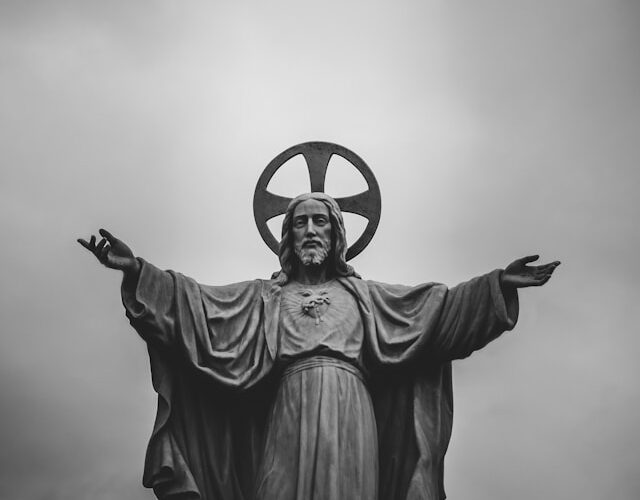
In today’s fast-paced and complex world, confusion often surrounds beliefs, values, and truths. Misinformation, cultural shifts, and competing ideologies can create uncertainty, making it challenging to discern what is real, just, and meaningful. In such times, faith serves as a stabilizing force—a lens through which individuals can hold to truth, find clarity, and navigate life with purpose. Understanding how faith functions in the age of confusion reveals its power to guide, inspire, and sustain individuals and communities.
The Nature of Confusion in Modern Life
Confusion arises from the overwhelming amount of information and conflicting perspectives encountered daily. Social media, news outlets, and even interpersonal interactions bombard people with messages that often contradict one another. This can result in:
- Moral uncertainty: Difficulty distinguishing right from wrong in complex situations.
- Intellectual overload: Struggling to process and evaluate vast amounts of information.
- Emotional turbulence: Feelings of doubt, anxiety, and fear that hinder decision-making.
In such an environment, maintaining faith rooted in truth becomes essential for clarity, ethical grounding, and purposeful action.
Faith as an Anchor in Uncertainty
Faith provides a framework for understanding reality, beyond the shifting tides of public opinion or cultural trends. It acts as an anchor that stabilizes individuals amidst uncertainty.
- Guiding principles: Faith teaches core values—honesty, justice, compassion—that remain constant despite changing circumstances.
- Moral clarity: By grounding decisions in a higher ethical standard, faith helps individuals discern right from wrong.
- Inner peace: Faith nurtures trust in a greater order or purpose, reducing anxiety and indecision.
In essence, faith enables individuals to hold to truth even when societal signals are unclear or contradictory.
The Role of Scripture and Sacred Teachings
Religious texts and spiritual teachings provide a source of truth that transcends cultural and temporal shifts. These teachings offer guidance on living ethically, resolving conflict, and engaging in meaningful service.
- Ethical standards: Sacred texts provide enduring principles that guide behavior, such as honesty, integrity, and fairness.
- Narratives of resilience: Stories of faith throughout history inspire perseverance and moral courage.
- Community interpretation: Shared understanding of scripture within communities fosters collective adherence to truth.
By turning to these sources, individuals find reference points that anchor their actions and decisions in enduring truths.
Faith Inspires Action Amid Confusion
Awareness of truth alone is insufficient without action. Faith motivates individuals and communities to embody truth through concrete deeds.
- Social justice initiatives: Faith often inspires advocacy for the marginalized, ethical governance, and equitable resource distribution.
- Community support: Faith-based networks mobilize volunteers, provide humanitarian aid, and create educational opportunities.
- Ethical leadership: Leaders guided by faith make decisions grounded in principles rather than convenience or popularity.
Faith transforms understanding into lived practice, ensuring that truth is not abstract but tangible in everyday life.
Overcoming Challenges to Faith in the Modern World
Maintaining faith in a world filled with confusion is not without challenges:
- Cultural relativism: Societal emphasis on subjective truth can undermine confidence in absolute moral standards.
- Misinformation: Exposure to false or distorted information can weaken conviction.
- Skepticism and criticism: Individuals may face ridicule or opposition when expressing faith-based beliefs.
Overcoming these challenges requires discernment, community support, and ongoing engagement with spiritual teachings. Faith must be active, reflective, and adaptable without compromising core truths.
Faith, Hope, and Resilience
Faith is often intertwined with hope—the belief that positive outcomes are possible and that effort aligned with truth will bear fruit. This combination strengthens resilience, enabling individuals to persist in the face of moral dilemmas, social pressure, or personal hardship.
- Courage to act ethically: Hope reinforces the belief that integrity matters, motivating right action.
- Sustaining communities: Shared faith and hope foster unity, mutual support, and collective perseverance.
- Transforming adversity: Faith and hope empower individuals to turn challenges into opportunities for growth and service.
Together, faith and hope allow people to navigate complexity with confidence and purpose.
Living Faithfully in a Confusing World
Practical ways to hold to truth through faith include:
- Engage with sacred teachings: Study, reflect, and apply principles to daily life.
- Seek community: Participate in groups that reinforce values and provide support.
- Practice discernment: Evaluate information critically, guided by ethical and spiritual principles.
- Act consistently: Translate belief into deeds that uphold truth, justice, and compassion.
- Reflect regularly: Assess actions and beliefs to ensure alignment with core truths.
This deliberate practice enables faith to remain a guiding force, even amid societal noise and uncertainty.
Conclusion
In the age of confusion, holding to truth through faith is both a personal and communal necessity. Faith provides clarity, ethical grounding, and a framework for meaningful action. It empowers individuals to navigate moral ambiguity, make principled decisions, and contribute positively to their communities.
By integrating faith with awareness, hope, and action, individuals can transform confusion into clarity, uncertainty into purpose, and knowledge into transformative deeds. Living faithfully is not about avoiding the complexities of the modern world—it is about confronting them with integrity, courage, and conviction.
Faith, when rooted in truth, acts as a stabilizing force, inspiring resilience, ethical action, and lasting social impact. It reminds us that even in turbulent times, individuals and communities can navigate uncertainty, uphold justice, and build a future grounded in truth and hope.