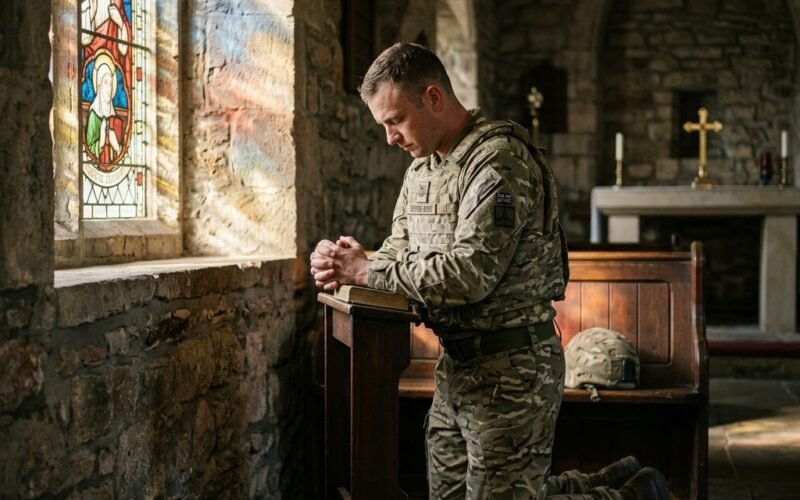
There are moments when the world outside the window looks genuinely frightening—when grief sits heavy on the chest, when uncertainty crowds out hope, when the noise of the age makes it hard to hear anything true or good. In those moments, the human heart does not primarily need more information. It needs an anchor. It needs a voice that does not waver. It needs, in short, the Word of God.
Kristen Wetherell, writing for Crossway, has gathered eighteen promises Scripture makes about itself—promises that remind us why opening the Bible is never a small or merely academic act. Read the source article for the full list. But the deeper question beneath every one of those promises is this: Why does God’s Word carry such power? The answer is not a what—it is a Who.
The Human Problem: We Are Blind and Hungry
Before we can appreciate what Scripture does for us, we must be honest about what we are without it. The Bible does not flatter its readers. It diagnoses them. The prophet Jeremiah declared what every honest heart eventually confesses:
“The heart is deceitful above all things, and desperately sick; who can understand it?” (Jeremiah 17:9, ESV)
Paul deepens the diagnosis in Ephesians, describing the natural human condition as being “darkened in their understanding, alienated from the life of God because of the ignorance that is in them, due to their hardness of heart” (Ephesians 4:18). We are not merely confused or misinformed—we are spiritually blind, cut off from the very source of life and light. Romans 3:23 leaves no exceptions: “For all have sinned and fall short of the glory of God.” The problem is not circumstantial. It is constitutional. We need more than better habits or stronger willpower. We need a new kind of sight, a new kind of life—and we need it to come from outside ourselves.
This is precisely why the promises of God’s Word are not motivational slogans. They are lifelines thrown to drowning people.
The Answer: Christ, the Living Word
Every promise Scripture makes about itself ultimately traces back to the One Scripture is about. John’s Gospel opens with a declaration that reframes everything:
“In the beginning was the Word, and the Word was with God, and the Word was God. He was in the beginning with God. All things were made through him, and without him was not any thing made that was made. In him was life, and the life was the light of men.” (John 1:1–4, ESV)
Jesus Christ is the Word made flesh. When Scripture promises to give life, it does so because it points to the One who is Life. When it promises light and understanding, it does so because it reveals the One who said, “I am the light of the world. Whoever follows me will not walk in darkness, but will have the light of life” (John 8:12). The Bible is not a self-help manual that happens to contain good advice about God. It is the Spirit-breathed testimony of the Father concerning his Son, given so that we might know him, trust him, and be transformed by him.
This is why the apostle Paul could write with such confidence: “For God, who said, ‘Let light shine out of darkness,’ has shone in our hearts to give the light of the knowledge of the glory of God in the face of Jesus Christ” (2 Corinthians 4:6). The same creative power that spoke the cosmos into existence is the power at work when a weary soul opens the Scriptures and encounters Christ. The Word is alive—not as a metaphor, but because its Author and Subject is the risen Lord who conquered death and now reigns.
What the Promises Actually Give Us
Wetherell’s eighteen promises are not arbitrary. Taken together, they paint a portrait of a God who is relentlessly committed to the flourishing of his people through his revealed truth. Consider what Scripture declares about itself:
- It is alive and active, piercing to the deepest places of the human heart (Hebrews 4:12).
- It gives wisdom for salvation, making us wise through faith in Christ Jesus (2 Timothy 3:15).
- It equips us for every good work, because all Scripture is breathed out by God (2 Timothy 3:16–17).
- It accomplishes God’s purposes, never returning to him empty (Isaiah 55:10–11).
- It sanctifies us—Jesus himself prayed, “Sanctify them in the truth; your word is truth” (John 17:17).
- It brings peace that outlasts every storm: “Great peace have those who love your law; nothing can make them stumble” (Psalm 119:165).
- It gives joy, for “the precepts of the Lord are right, rejoicing the heart” (Psalm 19:8).
None of these promises are contingent on our emotional state, our theological sophistication, or our consistency. They rest on the character of the God who made them. As Joshua recorded after a lifetime of watching God keep his word: “Not one word of all the good promises that the Lord had made to the house of Israel had failed; all came to pass” (Joshua 21:45).
Living It Out: Clinging to the Word in Daily Life
Knowing these promises intellectually is one thing. Letting them shape the rhythms of daily life is another. Here are three practical ways to move from information to formation:
1. Come to Scripture to See, Not Just to Study
The goal of Bible reading is not the accumulation of facts but the beholding of a Person. Psalm 27:4 captures the posture: “One thing have I asked of the Lord, that will I seek after: that I may dwell in the house of the Lord all the days of my life, to gaze upon the beauty of the Lord.” Before you open your Bible, ask the Holy Spirit to give you eyes to see Christ on every page—in the law’s demand that points to our need, in the prophets’ longing that he fulfilled, in the Gospels’ record of his life, and in the epistles’ unfolding of his grace.
2. Meditate on Specific Promises in Specific Trials
Psalm 119:50 is the testimony of a suffering believer: “This is my comfort in my affliction, that your promise gives me life.” The psalmist did not reach for a general sense that God is good. He reached for a specific promise. When anxiety rises, take Philippians 4:6–7 and pray it back to God. When grief overwhelms, sit with John 11:25. When temptation presses, memorize Hebrews 4:15–16. Let the particular promises of Scripture meet the particular pressures of your life.
3. Read with the Body of Christ, Not Only Alone
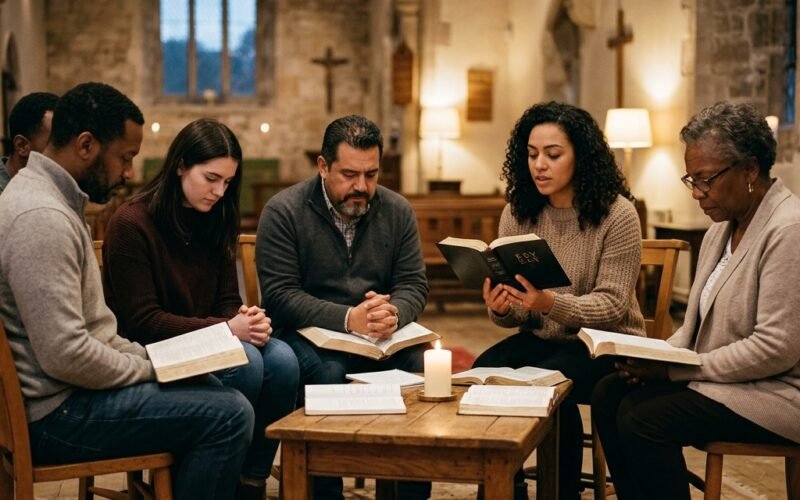
The word of Christ is meant to dwell in us richly, and Colossians 3:16 connects that dwelling to community: “Let the word of Christ dwell in you richly, teaching and admonishing one another in all wisdom, singing psalms and hymns and spiritual songs.” Private Bible reading is vital, but it was never meant to be the whole of our engagement with Scripture. Bring the Word into your small group, your family table, your friendships. Let others speak the promises over you when you have forgotten them.
The Gospel That Makes Every Promise Possible
Every promise of God’s Word rests on a foundation: the finished work of Jesus Christ. We were sinners—alienated from God, spiritually dead, unable to save ourselves. But God, rich in mercy, sent his Son. Jesus lived the perfectly obedient life we could not live. He died on the cross, bearing the full weight of our sin and the wrath it deserved. He rose from the dead on the third day, defeating death and vindicating everything he claimed to be. And now he offers, freely and without condition, the gift of new life to all who turn from sin and trust in him.
“For by grace you have been saved through faith. And this is not your own doing; it is the gift of God, not a result of works, so that no one may boast.” (Ephesians 2:8–9, ESV)
Every promise in the Bible is a “Yes” in Christ (2 Corinthians 1:20). The Word is not merely a book of good advice—it is the living testimony of a living Savior who is making all things new. If you have never placed your trust in him, today is the day. Open the Scriptures. Ask God to open your eyes. The same Word that spoke light into the darkness at creation is speaking still—and it never returns empty.