Why Prayer Matters More Than You Think
Prayer isn’t just about closing your eyes and saying words. It’s a conversation with something greater than yourself. Whether you’re religious or spiritual, prayer can bring peace to your mind, clarity to your thoughts, and strength to face daily challenges.
But here’s the problem: most people struggle to pray regularly. Life gets busy. You forget. You’re too tired. Before you know it, weeks pass without a single moment of prayer. Sound familiar?
The good news? Building a prayer habit doesn’t require superhuman willpower. You just need the right approach. This article will show you exactly how to create a prayer routine that sticks, even when life throws curveballs your way.
Let’s dive into practical strategies that actually work.
Start Small and Be Realistic
Forget praying for an hour every day. That’s setting yourself up for failure, especially if you’re just starting out.
Think about it this way: if you’ve never exercised before, you wouldn’t run a marathon on day one. The same logic applies to prayer. Start with something so easy you’d feel silly not doing it.
The Two-Minute Rule
Begin with just two minutes of prayer each day. That’s it. Two minutes is short enough that you can’t make excuses, but long enough to create a real connection.
Here’s what two minutes can look like:
- A simple thank you for three good things in your life
- A quick request for help with something specific
- A moment of silence to clear your mind
Once two minutes becomes automatic, you can gradually increase the time. Some days you’ll naturally pray longer. Other days, two minutes is perfect. Both are wins.
Pick One Time and Stick to It
Your brain loves consistency. When you pray at the same time every day, it becomes automatic—like brushing your teeth.
The best times for prayer are usually:
- Right after waking up (before checking your phone)
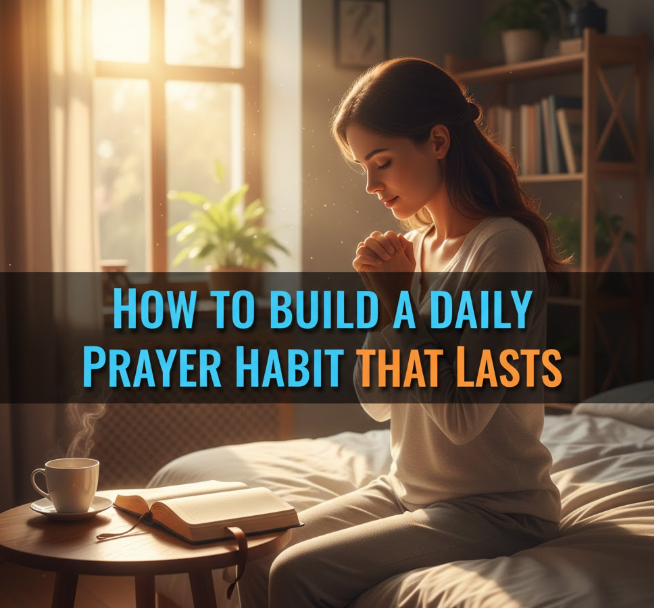
- During your morning coffee or tea
- Before lunch
- Right before bed
Choose one that fits your schedule. The specific time matters less than the consistency.
Create a Prayer Trigger
What’s a trigger? It’s something you already do every day that reminds you to pray.
Your brain works on patterns. When you link prayer to an existing habit, you’re much more likely to remember it. This is called “habit stacking,” and it’s incredibly powerful.
Examples of Prayer Triggers
| Existing Habit | Prayer Trigger |
|---|---|
| Drinking morning coffee | Pray while the coffee brews |
| Brushing teeth at night | Pray right after brushing |
| Getting into bed | Pray before pulling up the covers |
| Starting your car | Pray before driving away |
| Eating lunch | Pray before the first bite |
Pick one trigger and use it every single day. After a few weeks, prayer will feel as natural as the habit it’s attached to.
Make Your Prayer Space Special
You don’t need a fancy room or expensive equipment. But having a designated spot for prayer makes a huge difference.
Why Space Matters
When you pray in the same place repeatedly, your brain associates that spot with peace and focus. The moment you sit down, your mind knows: “It’s prayer time.”
How to Set Up Your Prayer Corner
Find a quiet spot where you won’t be disturbed. It could be:
- A corner of your bedroom
- A comfortable chair by a window
- A cushion on the floor
- Even your car (parked, of course)
Add a few simple items that help you focus:
- A candle (real or battery-powered)
- A meaningful object (like a cross, prayer beads, or a special stone)
- A journal for writing prayers
- A soft blanket or cushion
Keep it simple. The goal is comfort and focus, not perfection.
Write Down Your Prayers
There’s something powerful about putting prayers on paper. Writing slows down your thoughts and helps you focus. Plus, you create a record you can look back on later.
Three Ways to Journal Your Prayers
The Gratitude List: Write three things you’re grateful for, then turn them into prayers of thanks. This takes less than five minutes and shifts your mindset to positivity.
The Request List: Write down what you’re asking for. Be specific. Instead of “help me at work,” write “give me patience during tomorrow’s difficult meeting.” Specific prayers feel more real.
The Conversation Style: Write your prayers like you’re texting a friend. Don’t worry about fancy language. Just be honest and real.
Many people find that journaling helps them concentrate better than silent prayer alone. Experiment and see what works for you.
Use Prayer Reminders (And Don’t Feel Guilty About It)
Your phone isn’t just a distraction machine. It can actually help your prayer life.
Set a daily alarm with a label like “Talk to God” or “Prayer Time.” When it goes off, stop what you’re doing and pray—even if it’s just for sixty seconds.
Other Reminder Ideas
- Sticky notes on your bathroom mirror
- A prayer bracelet or ring you see constantly
- A background image on your phone with a prayer prompt
- Calendar blocking (literally schedule prayer like a meeting)
Some people feel like needing reminders means they’re not “spiritual enough.” That’s nonsense. Even the most devoted people use reminders. It’s smart, not weak.
Find the Right Prayer Style for You
Not everyone connects with prayer the same way. Some people love silence. Others need words. Some prefer movement. There’s no wrong way to pray.
Different Prayer Approaches to Try
| Prayer Style | How It Works | Best For |
|---|---|---|
| Spoken Prayer | Saying prayers out loud | People who process thoughts by talking |
| Silent Meditation | Quiet reflection and listening | Those who need peace from constant noise |
| Written Prayer | Journaling or letter-writing to God | Visual learners and processors |
| Walking Prayer | Praying while taking a walk | Active people who think better while moving |
| Guided Prayer | Using apps or recordings | Beginners who need structure |
| Prayer Music | Listening to spiritual songs | Audio learners and music lovers |
Try different styles throughout the week. Monday might be walking prayer. Tuesday could be journaling. Mix it up until you find what feels natural.
Connect Prayer to Your Real Life
Prayer shouldn’t feel separate from your everyday experience. The most powerful prayers come from your actual life—your worries, hopes, frustrations, and joys.
Make Prayer Practical
Instead of generic prayers, get specific about what’s happening in your life right now:
Before a tough conversation: “Give me the right words and a calm heart.”
When you’re stressed: “Help me remember what actually matters.”
After something good happens: “Thank you for this moment. Help me appreciate it fully.”
When you mess up: “I need help doing better tomorrow.”
The more you connect prayer to real moments, the more natural it becomes.
Track Your Progress (But Don’t Be Harsh)
What gets measured gets done. Tracking your prayer habit helps you stay consistent without being judgmental.
Simple Tracking Methods
The Calendar Method: Put an X on your calendar for each day you pray. Try to build a chain of X’s. Don’t break the chain.
The Habit App: Use free apps like Habitica, Streaks, or Done to track your daily prayer. Seeing your streak grow is surprisingly motivating.
The Jar Method: Put a small object (coin, bead, or button) in a jar each day you pray. Watch the jar fill up over weeks and months.
Here’s the important part: if you miss a day, don’t quit. Just start again the next day. One missed day doesn’t erase all your previous efforts.
Pray With Other People Sometimes
Solo prayer is valuable, but praying with others adds a different dimension. There’s power in shared intention.
You don’t need to join a formal prayer group (though that’s great if it appeals to you). Start small:
- Pray with your spouse or partner before bed
- Text a friend and pray together over the phone
- Join an online prayer community
- Attend one religious service per week
When you know someone else is counting on you, you’re more likely to show up. Plus, hearing how others pray can inspire your own practice.
Handle the Obstacles Before They Happen
Every prayer habit faces challenges. The key is planning for them in advance.
Common Obstacles and Solutions
Problem: “I forget to pray.”
Solution: Set multiple reminders and use habit stacking.
Problem: “I’m too tired at night.”
Solution: Move prayer to morning when you have more energy.
Problem: “I don’t know what to say.”
Solution: Start with “thank you” or use a prayer guide.
Problem: “I feel like I’m talking to myself.”
Solution: This is normal. Keep going. The feeling of connection grows with practice.
Problem: “I miss days and feel guilty.”
Solution: Guilt helps no one. Just restart without judgment.
Planning for these obstacles makes them easier to overcome when they appear.
Keep Your Prayers Fresh and Honest
Repetition is good for building habits, but your prayers shouldn’t become mindless recitation.
Ways to Keep Prayer Engaging
Change your prayer position: Stand, sit, kneel, walk, or lie down. Physical variety helps mental freshness.
Pray for different people: Monday for family, Tuesday for friends, Wednesday for strangers, and so on.
Use different prayer formats: Questions one day, gratitude the next, then requests.
Add variety to your routine: Morning prayers might be thankfulness, evening prayers might be reflection.
The goal is consistency in the habit, not identical repetition of the same words.
Measure Success Differently
Here’s a secret: the quality of your prayer matters more than the quantity. A genuine two-minute prayer beats a distracted twenty-minute session.
What Real Progress Looks Like
Success isn’t just about praying every single day without fail. It’s also about:
- Feeling more peace in your daily life
- Handling stress better than before
- Thinking of prayer naturally when challenges arise
- Being more grateful for small things
- Feeling more connected to your values
These changes happen slowly. You might not notice them day-to-day, but after a month or two, you’ll see the difference.
The 30-Day Challenge That Works
Ready for a challenge? Here’s a simple 30-day plan to build your prayer habit:
Days 1-10: Pray for just two minutes at the same time every day. Focus on establishing the routine.
Days 11-20: Increase to five minutes. Add variety to your prayer style (try journaling, walking, or spoken prayer).
Days 21-30: Settle into your natural rhythm. Some days might be two minutes, others ten. Both are perfect.
By day 30, prayer will feel like a natural part of your day. You won’t have to force it anymore.
Frequently Asked Questions
What if I miss several days in a row?
Don’t beat yourself up. Just start again today. Missing days doesn’t erase your previous progress. The habit gets stronger every time you restart.
How long should I pray each day?
Start with two minutes. Quality beats quantity every time. As the habit strengthens, you’ll naturally pray longer on some days.
What should I actually say during prayer?
Be yourself. Say thank you, ask for help, share your worries, or just sit in silence. There’s no script required.
Is morning or evening prayer better?
Whichever time you’ll actually do consistently. Morning works for most people because you have more energy and fewer distractions.
Do I need to pray in a specific position?
No. Pray however feels comfortable and helps you focus. Sitting, standing, kneeling, or walking all work fine.
Can I pray while doing other things?
For building the initial habit, give prayer your full attention. Once established, you can add brief prayers throughout your day during activities.
What if prayer feels awkward or forced?
This is completely normal at first. The awkwardness fades with practice. Keep showing up even when it feels strange.
Should I pray out loud or silently?
Try both and see what helps you focus better. Some people need to hear their own voice, others prefer silence.
Your Next Steps
Building a prayer habit that lasts doesn’t require perfection. It requires patience, consistency, and kindness toward yourself.
Here’s what to do right now:
Step 1: Choose your prayer time (morning works best for most people).
Step 2: Pick your trigger habit (something you already do daily).
Step 3: Decide on your starting length (two minutes is perfect).
Step 4: Set up one reminder (phone alarm or sticky note).
Step 5: Start tomorrow. Not Monday. Not next month. Tomorrow.
Remember, you’re not trying to become a prayer expert overnight. You’re simply creating a small daily practice that connects you to something meaningful. That’s enough.
The most important prayer isn’t the longest one or the most eloquent one. It’s the one you actually do. Start small, stay consistent, and watch how this simple practice transforms your life from the inside out.
Your prayer habit doesn’t need to look like anyone else’s. It just needs to be real, honest, and yours. Now go build something that lasts.