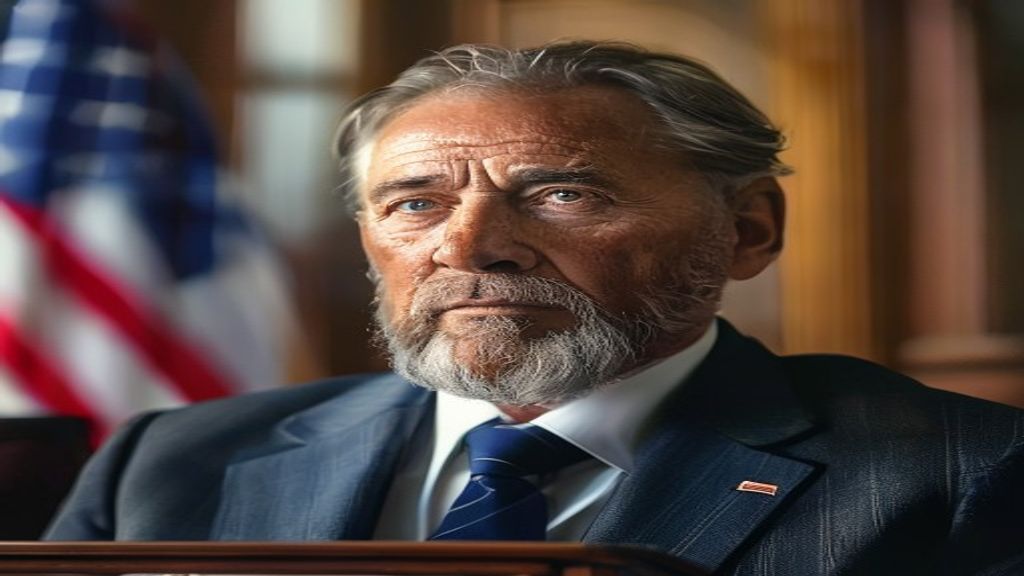
Leo Terrell, a longtime civil‑rights attorney, has been appointed to lead a new federal task force that monitors and responds to threats against the Jewish community in the United States. In a recent interview with The Magazine, Terrell said the fight against antisemitism is “personal to me,” citing his own family’s experience with racial prejudice and his belief that defending the vulnerable is a moral imperative.
From civil‑rights advocacy to protecting the Jewish people
Terrell’s career began in the 1970s, working alongside prominent figures in the civil‑rights movement. He later served as a deputy governor in California and as an outspoken commentator on issues of race and justice. The new task force, authorized by the Department of Justice, will gather intelligence, coordinate with local law‑enforcement agencies, and provide resources to communities facing antisemitic harassment or violence.
Biblical foundation for standing with the oppressed
For believers, the call to defend the persecuted resonates with Scripture. Psalm 82:3 exhorts, “Defend the cause of the weak and the fatherless; uphold the cause of the poor and the needy.”
“Speak the truth in love, even when it puts you at risk.”
The New Testament also urges believers to “love our neighbors as ourselves” (Mark 12:31), a principle that extends across ethnic and religious lines.
In Proverbs 31:8‑9 we read, “Speak up for those who cannot speak for themselves, for the rights of all the destitute. Speak up and judge fairly; defend the rights of the poor and needy.” Terrell’s statement that confronting antisemitism is “personal” aligns with this biblical mandate to act on behalf of those who are marginalized.
Perspective on prophecy and justice
Some Christians view contemporary efforts to protect Israel’s people and Jewish communities as part of a broader biblical narrative of nations being held accountable for their treatment of God’s people. Perspective: This does not imply a specific end‑times timeline, but rather reflects an understanding that God’s justice, as described in Jeremiah 22:3, “Do what is just and right, and deliver the one who has been robbed, and do not oppress the foreigner, the orphan, the widow.” The task force can be seen as a modern fulfillment of that call for societal righteousness.
Impact and challenges ahead
The task force’s mandate includes tracking online hate speech, responding to threats of violence, and supporting victims in accessing legal recourse. Terrell acknowledges the difficulty of confronting deeply rooted prejudice but stresses that “the fight is not abstract; it affects real families, real lives.” He also emphasizes the importance of coalition‑building with Jewish organizations and other faith‑based groups.
Critics occasionally argue that government‑led monitoring could infringe on free speech. Terrell counters that the focus is on “real threats that cross the line into criminal behavior,” a distinction echoed in the biblical principle of protecting the innocent while upholding liberty (Romans 13:1‑4).
Looking forward
As the task force begins its work, believers are invited to pray for wisdom for its leaders, for healing in communities scarred by hate, and for the broader societal transformation that Scripture envisions: a world where “the wolf shall dwell with the lamb” (Isaiah 11:6), and where justice rolls on like a river.
For the full interview, see the original article on The Jerusalem Post.