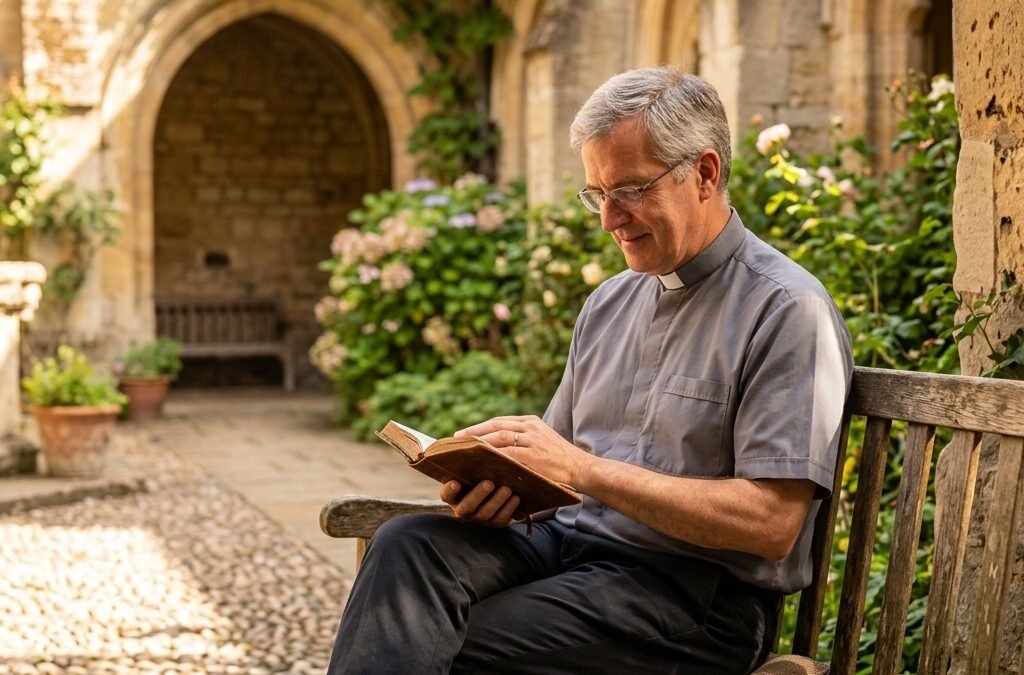
In an age defined by continuous digital notifications, fragmented focus, and rapid-fire commentary, the human mind is constantly bombarded with transient thoughts. We daily navigate an overwhelming sea of information, yet many believers find themselves starving for genuine wisdom. In the quiet moments of daily life, Christians long for a deeper, more enduring connection to the God who speaks. The ancient discipline of Scripture memorization stands as a quiet yet revolutionary antidote to this modern restlessness. As the Psalmist declared, “I have stored up your word in my heart, that I might not sin against you” (Psalm 119:11).
Reflecting on four decades of pastoral work, pastor Andy Davis shared how committing entire chapters and books of the Bible to memory transformed his personal spiritual life, sermon preparation, and pastoral care. Read the source article. Far from being a mere academic drill or a task reserved for vocational ministers, storing God’s Word in the mind is a foundational practice for every follower of Jesus who desires to grow in holiness and fruitfulness (2 Timothy 3:16–17).
The Fragility of the Human Heart and Mind
To understand why Scripture memory is so vital, we must first recognize the deep diagnosis God’s Word gives regarding the human condition. Scripture reminds us that the human heart is naturally prone to spiritual drift and deceitfulness. The prophet Jeremiah observed, “The heart is deceitful above all things, and desperately sick; who can understand it?” (Jeremiah 17:9). Left to our own devices, our fallen minds absorb the values, anxieties, and deceptive priorities of the world around us. Without intentional immersion in divine truth, our thought patterns default to self-reliance and fear rather than trust in God (Romans 12:2).
“Do not be conformed to this world, but be transformed by the renewal of your mind, that by testing you may discern what is the will of God, what is good and acceptable and perfect.” — Romans 12:2
This internal instability affects how we handle trials, temptation, and interpersonal conflict. When pressure mounts, what flows out of us is whatever has taken root within us. The apostle Paul instructed the believers in Ephesus to “put off your old self, which belongs to your former manner of life and is corrupt through deceitful desires, and to be renewed in the spirit of your minds” (Ephesians 4:22–23). Memorizing Scripture is not merely an intellectual effort; it is an active participation in the Holy Spirit’s work of renewing our minds, replacing destructive falsehoods with eternal reality.
Jesus Christ: The Eternal Word Made Flesh
Our call to treasure God’s Word in our hearts finds its supreme fulfillment in Jesus Christ. Jesus is not merely a teacher of truth; He is the very Logos—the eternal Word made flesh who dwelt among us (John 1:1, 14). When Jesus faced the ferocious temptations of Satan in the wilderness, He did not rely on human ingenuity or novel arguments. Instead, He drew directly upon the Scriptures He had stored in His heart, rebutting every deception with the authoritative statement, “It is written” (Matthew 4:4).
“Let the word of Christ dwell in you richly, teaching and admonishing one another in all wisdom, singing psalms and hymns and spiritual songs, with thankfulness in your hearts to God.” — Colossians 3:16
In Christ, “are hidden all the treasures of wisdom and knowledge” (Colossians 2:3). When we memorize the Bible, we are not just committing words to paper in our minds; we are getting to know the Savior who inspired those words. Jesus taught His disciples that true spiritual fruitfulness comes only through intimate communion with Him: “If you abide in me, and my words abide in you, ask whatever you wish, and it will be done for you” (John 15:7). Memorization causes Christ’s words to take deep root within us, fueling our love for Him and aligning our desires with His kingdom.
Cultivating the Discipline of Scripture Memorization
Committing Scripture to memory is a practice available to every believer, regardless of age, background, or intellectual training. By taking small, consistent steps, any Christian can begin storing up divine truth for daily living.
1. Slow Down and Meditate on Extended Passages
Rather than rushing through vast amounts of text, memorization forces us to slow down, examine individual words, and observe how biblical arguments develop. By focusing on a single verse or paragraph day after day, we begin to perceive nuances of grace and truth that quick reading often overlooks. As the Psalmist proclaimed, “Oh how I love your law! It is my meditation all the day” (Psalm 119:97). Sustained meditation shapes our worldview and embeds biblical truth into our subconscious thought patterns.
2. Fuel Your Daily Prayer Life
When Scripture is stored in the heart, prayer changes from a struggle for words into a dynamic conversation built upon God’s own promises. Instead of relying on vague requests, we pray God’s revealed will back to Him with confidence and reverence. God exhorted Joshua, “This Book of the Law shall not depart from your mouth, but you shall meditate on it day and night, so that you may be careful to do according to all that is written in it” (Joshua 1:8). Scripture memory provides the language through which we adore God, confess our sin, and intercede for others.
3. Equip Your Soul for Spiritual Warfare and Ministry
When unexpected trials, severe temptations, or opportunities to minister arise, we rarely have time to look up a verse in a concordance. Having Scripture stored within our minds allows the Holy Spirit to bring specific truths to remembrance exactly when needed. Paul describes the Word of God as “the sword of the Spirit” (Ephesians 6:17). Whether counseling a friend through grief, resisting personal sin, or sharing the gospel with a neighbor, memorized Scripture equips us to speak words of eternal life with clarity and gentle confidence (1 Peter 3:15).
“Take the helmet of salvation, and the sword of the Spirit, which is the word of God.” — Ephesians 6:17
The Ultimate Promise: God’s Law Written on Our Hearts
As valuable as the discipline of Scripture memorization is, we must remember that cognitive knowledge alone cannot save us. Salvation is not earned by how many chapters we can recite, nor by how rigorously we practice spiritual disciplines. All of us have fallen short of God’s glory, rebelling against His righteous law in thought, word, and deed (Romans 3:23). Yet in His immense love and mercy, God sent His Son, Jesus Christ, to pay the debt for our redemption.
On the cross, Jesus bore the full punishment for our sins, dying in our place and rising triumphantly from the dead on the third day to defeat sin and death forever (1 Peter 2:24). Through His sacrificial death, God offers full forgiveness and eternal life to anyone who repents of their sin and trusts in Jesus alone for salvation. Under the New Covenant sealed by His blood, God makes a breathtaking promise: “I will put my laws into their minds, and write them on their hearts, and I will be their God, and they shall be my people” (Hebrews 8:10).
When you place your faith in Christ, the Holy Spirit indwells you, giving you a new heart that desires to love, obey, and treasure God’s Word. If you have not yet trusted in Jesus, turn to Him today in faith. And if you belong to Him, dedicate your mind anew to hiding His precious truth in your heart—for in His words are life everlasting (John 6:68).