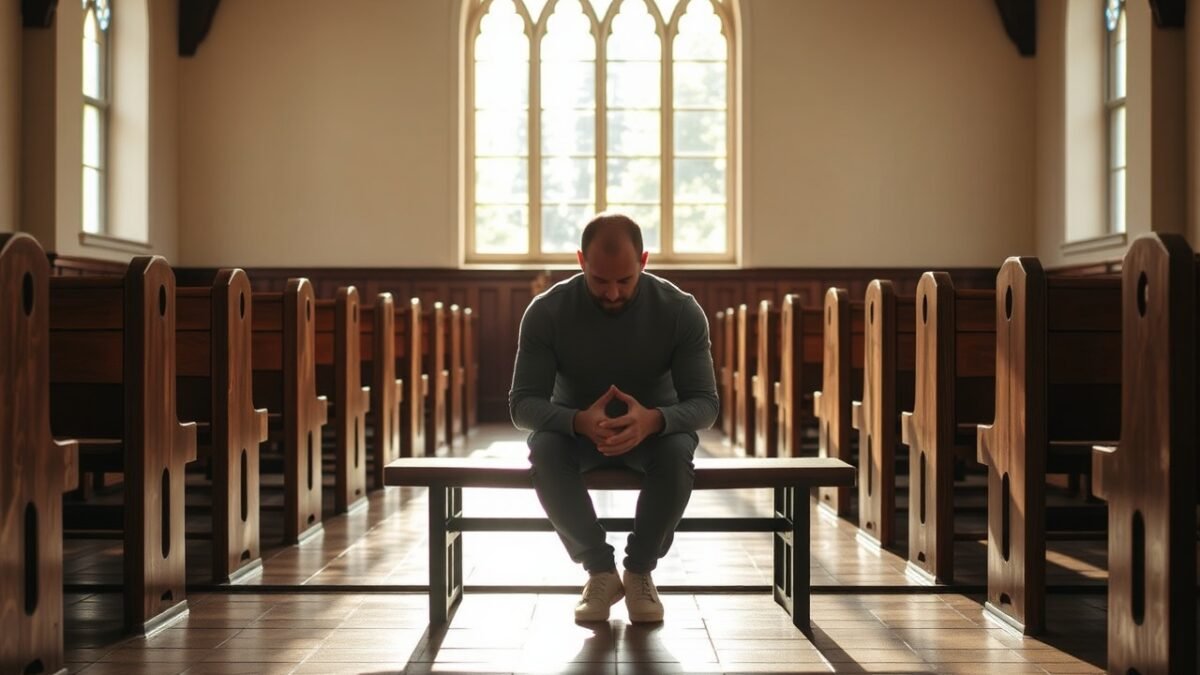
Many believers experience the exhausting tension of a divided heart. We desire to honor God with our worship, yet during the flow of daily life, our affections shift easily toward worldly approval, material security, or self-preservation. In the New Testament letter of James, the apostle names this spiritual malady with uncompromising clarity: he calls it being “double-minded” (James 1:8). The original Greek term, dipsychos, literally means “two-souled,” describing a person drawn simultaneously in two opposing directions. As theologian David Gibson notes in a helpful overview of the letter, James writes to expose this spiritual duplicity and point believers toward a unified, wholehearted devotion to God. (Read the source article). Scripture insists that true peace cannot exist within a divided soul, for “a double-minded man is unstable in all his ways” (James 1:8).
This instability manifests not merely as intellectual doubt, but as a deep conflict within our loyalties. We may sing praises in church on Sunday morning, yet yield to worldly patterns of speech, selfish ambition, and harsh judgment by Tuesday afternoon. James pulls back the veil on this inconsistency, confronting the church with solemn urgency: “You adulterous people! Do you not know that friendship with the world is enmity with God?” (James 4:4). When we attempt to hold one hand out to Christ while keeping the other rooted in worldly values, we breach our covenant relationship with our Creator. God created the human heart to flourish in undivided communion with Him, yet our fallen nature constantly draws us toward spiritual compromise (Proverbs 4:23).
The Biblical Diagnosis: A Fractured Human Heart
The root of this double-minded condition stretches back to the fall of humanity, where sin fractured our alignment with God’s holiness. The prophet Jeremiah diagnosed the gravity of human spiritual betrayal, declaring, “The heart is deceitful above all things, and desperately sick; who can understand it?” (Jeremiah 17:9). Because of our inherited sin nature, we naturally seek ultimate fulfillment in created things rather than the Creator Himself. The apostle Paul echoed this internal war, writing, “For I do not do the good I want, but the evil I do not want is what I keep on doing” (Romans 7:19). Left to our own strength, we are incapable of healing our broken motives or establishing perfect integrity before a holy God.
“Submit yourselves therefore to God. Resist the devil, and he will flee from you. Draw near to God, and he will draw near to you. Cleanse your hands, you sinners, and purify your hearts, you double-minded.” — James 4:7–8
Scripture reveals that our divided loyalty is not merely a psychological flaw; it is a spiritual disease that requires divine intervention. When we try to patch over our double-mindedness with outward moral performance, we only produce hypocrisy. As Paul explains in his epistle to the Romans, “For God has done what the law, weakened by the flesh, could not do” (Romans 8:3). Our hearts cannot be mended by sheer willpower or religious rule-keeping, because sin has compromised the very seat of our desires.
The Christ-Centered Cure: Wholehearted Obedience and Abundant Grace
This severe diagnosis is not designed to drive us to despair, but to drive us to the Savior. Where humanity is hopelessly double-minded, Jesus Christ lived in absolute, flawless wholeness. Jesus walked the earth with a single, unyielding devotion to the glory of the Father and the redemption of lost sinners, declaring, “I always do the things that are pleasing to him” (John 8:29). Unlike us, Christ was never divided in His affections, never compromised with worldly power, and never wavered in His perfect obedience to the holy law of God. He was tempted in every way as we are, yet lived entirely without sin (Hebrews 4:15).
At the cross of Calvary, Jesus offered His whole, unblemished life as the ultimate sacrifice for our duplicity and rebellion. On that shameful tree, Christ took upon Himself the guilt of our spiritual adultery, bearing the full wrath of God that our sinful dividedness deserved (2 Corinthians 5:21). “He himself bore our sins in his body on the tree, that we might die to sin and live to righteousness” (1 Peter 2:24). By His death and triumphant resurrection, Jesus did not merely provide a moral example for us to copy; He purchased our redemption, paid our debt in full, and secured the forgiveness of every repentant sinner who trusts in Him.
Because of Christ’s finished work, God’s response to our foolish wandering is not rejection, but scandalously generous mercy. When James addresses churches fractured by conflict and worldly ambition, he highlights the vastness of divine compassion: “But he gives more grace” (James 4:6). God does not abandon His straying people; instead, He woos us back through the gospel. When we humble ourselves before Him, turning away from our compromise, Christ meets us with forgiving love and transforms our hearts from the inside out (Titus 3:5).
“Count it all joy, my brothers, when you meet trials of various kinds, for you know that the testing of your faith produces steadfastness. And let steadfastness have its full effect, that you may be perfect and complete, lacking in nothing.” — James 1:2–4
Living the Undivided Life in Daily Discipleship
How then do we walk in the wholeness Christ has secured for us? Scripture calls us to active, daily cooperation with the Holy Spirit as He conforms us to the image of the Son (Romans 8:29).
1. Reflecting Joy in Suffering
When trials threaten to shatter our faith, we are invited to trust God’s purifying purpose. James instructs us to count suffering as joy because “the testing of your faith produces steadfastness” (James 1:3). God uses difficult circumstances not to destroy us, but to burn away our reliance on worldly idols and consolidate our faith in Christ alone (1 Peter 1:7).
2. Guarding the Tongue Through Heart Renewal
Our speech is the direct overflow of our internal condition. “No human being can tame the tongue,” James warns, revealing that controlled speech requires a heart surrendered to Jesus (James 3:8). When the Spirit cleanses the heart, our words transform from instruments of destruction into streams of grace and encouragement (Ephesians 4:29).
3. Pursuing Restorative Fellowship
An undivided life cannot be sustained in isolation. James concludes his letter by charging believers to seek out those who drift: “My brothers, if anyone among you wanders from the truth and someone brings him back, let him know that whoever brings back a sinner from his wandering will save his soul from death” (James 5:19–20). Loving, local church fellowship serves as God’s ordained means to keep our hearts accountable and steadfast (Hebrews 10:24–25).
“Therefore, if anyone is in Christ, he is a new creation. The old has passed away; behold, the new has come.” — 2 Corinthians 5:17
The Call to Wholehearted Faith
If you recognize today that your heart has been divided—loving the things of God on the surface while clinging to the world in secret—know that Jesus Christ offers complete forgiveness and a fresh beginning. We are all sinners who fall short of God’s holy standard (Romans 3:23). We cannot repair our own brokenness, nor can human effort cleanse our double-mindedness. But God, in His infinite love, sent His Son to die on the cross for our sins and raised Him from the dead on the third day to conquer sin and death forever (1 Corinthians 15:3–4).
Salvation is a free gift offered to all who repent and place their trust in Jesus Christ alone. When you turn from your sin and surrender your life to the Lord Jesus, God forgives your transgressions, clothes you in Christ’s perfect righteousness, and places His Holy Spirit within you to grant you a new, undivided heart (Ezekiel 36:26). Do not remain trapped in the exhaustion of a divided life. Turn to Christ today in faith, draw near to God, and receive the abundant grace that heals the double-minded soul forever (Romans 10:9–10).