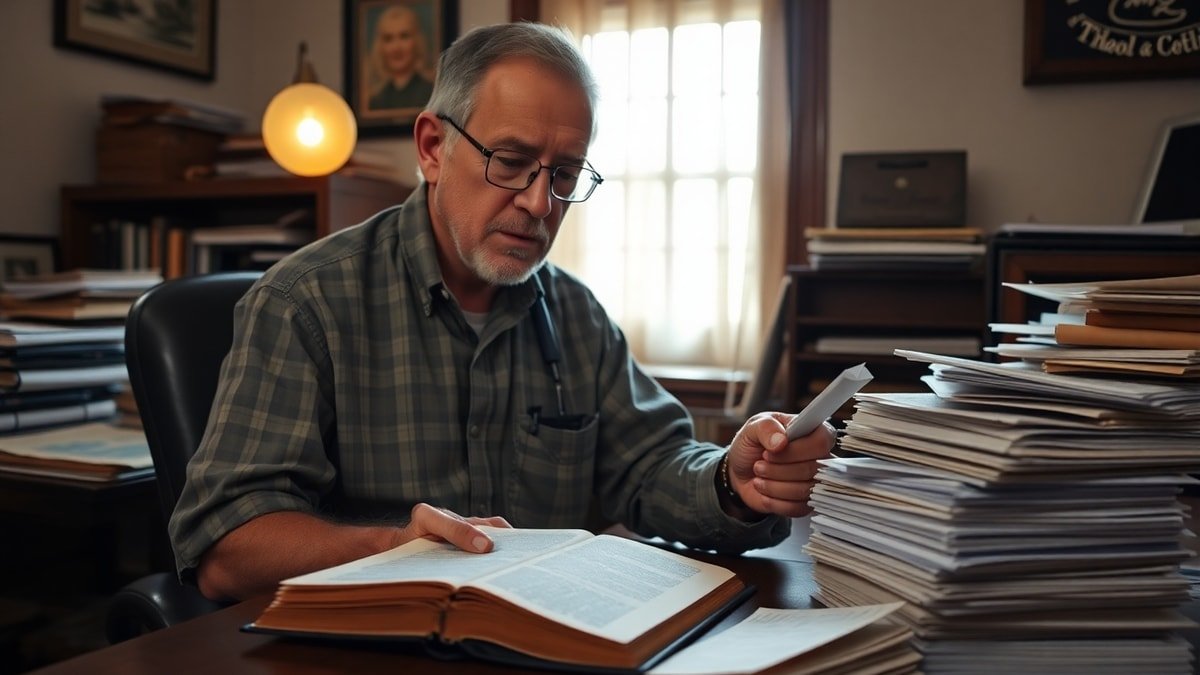
There is a quiet kind of faithfulness the world rarely celebrates. It does not headline conferences, fill auditoriums, or trend on social media. It shows up early, works behind the scenes, vouches for the person no one else trusts, and then — when the moment comes — steps aside so someone else can lead. The New Testament has a name for this kind of servant: Barnabas. And the church today desperately needs to rediscover him.
Read the source article by Josh Irby at The Gospel Coalition, which traces Barnabas through the book of Acts and makes a compelling case that he is the most overlooked missionary in the Bible — and one of the most urgently needed models for global mission today.
A Human Hunger for Recognition
Before we can appreciate Barnabas, we must honestly name the condition he quietly overcame. Every human heart carries a gravitational pull toward the center of the room. We want our names spoken first, our contributions credited, our sacrifices noticed. This is not merely a personality quirk — it is the fingerprint of the Fall. When Adam and Eve grasped for equality with God in the garden, they set in motion a world where every person would be tempted to make themselves the protagonist of every story (Genesis 3:5–6).
The Apostle Paul diagnoses this condition with unflinching clarity:
“Do nothing from selfish ambition or conceit, but in humility count others more significant than yourselves. Let each of you look not only to his own interests, but also to the interests of others.” — Philippians 2:3–4 (ESV)
This is not natural. It is supernatural. And it is precisely what Barnabas embodied — not because he was temperamentally mild, but because he had been transformed by the gospel he proclaimed. The ambition to be seen is the wound; the cross is the cure.
Who Was Barnabas, Really?
Most Christians know Barnabas as the “son of encouragement” (Acts 4:36, ESV), and they leave it there. But a careful reading of Acts reveals a man of extraordinary range. He was a Levite with social standing and financial resources. He was one of the first in the Jerusalem church to sell property and lay the proceeds at the apostles’ feet, catalyzing a culture of radical generosity (Acts 4:36–37). When the newly converted Saul arrived in Jerusalem — a man the church rightly feared as a former persecutor — it was Barnabas who vouched for him, brought him to the apostles, and opened the door to Paul’s first ministry role (Acts 9:27). When the church in Antioch was young and vulnerable, the Jerusalem leaders trusted Barnabas to disciple these new Gentile believers through the dangerous terrain of ethnic and cultural difference (Acts 11:22–24). And when Barnabas had raised up enough leaders in Antioch, he and Paul were commissioned as the church’s first outgoing missionaries (Acts 13:1–3).
Barnabas was a teacher, trainer, giver, challenger, and leader. He was also the man who later advocated for the failing John Mark — the same John Mark who would go on to write the Gospel of Mark. Barnabas had an uncanny gift for seeing what God was doing in people before anyone else could see it.
The Christ Who Modeled the Background
Barnabas did not invent this posture. He learned it from Jesus. The Son of God, through whom all things were made (John 1:3), entered human history not as a conquering emperor but as a carpenter’s son in an occupied province. He washed feet. He touched lepers. He called fishermen. He spent three years investing in twelve ordinary men rather than building a platform for himself.
“For even the Son of Man came not to be served but to serve, and to give his life as a ransom for many.” — Mark 10:45 (ESV)
The cross itself is the ultimate act of background faithfulness. Jesus did not die to be famous. He died to reconcile sinners to a holy God — a work accomplished in darkness, in shame, outside the city gates, while the crowds who had cheered him days before demanded his execution. And then, on the third day, God raised him from the dead, vindicating everything Jesus had done and said, and opening the way for all who trust in him to be made new (Romans 4:25). The resurrection is God’s declaration that faithfulness in obscurity is never wasted.
Paul draws the direct line between Christ’s humility and our calling:
“Have this mind among yourselves, which is yours in Christ Jesus, who, though he was in the form of God, did not count equality with God a thing to be grasped, but emptied himself, by taking the form of a servant.” — Philippians 2:5–7 (ESV)
Barnabas had this mind. We are called to have it too.
Living It Out: Three Lessons from Barnabas for Today’s Disciple
1. Be Trustworthy with People and Resources
Barnabas was entrusted with a young, culturally fragile church in Antioch and with famine-relief funds destined for Jerusalem (Acts 11:22–30). He was described simply as “a good man, full of the Holy Spirit and faith” (Acts 11:24, ESV). In an age when financial accountability in Christian ministry is under serious scrutiny — estimates suggest billions in Christian funds are mishandled annually — the church needs men and women who are boring in the best possible way: reliably, quietly, unspectacularly faithful. Trustworthiness is not glamorous. It is godly.
2. Advocate for the Overlooked
Barnabas used his position and credibility not to elevate himself but to open doors for others — Paul, the Antioch church, John Mark. The global church today is full of gifted leaders in the Global South, young practitioners whose methods are Spirit-led but unrecognized, and scholars whose voices have never been amplified in the rooms where decisions are made. The Barnabas calling is to use whatever influence God has given you to pull someone else’s chair up to the table. As Paul writes, “Let no one seek his own good, but the good of his neighbor” (1 Corinthians 10:24, ESV).
3. Know When to Step Back
Perhaps the most countercultural lesson Barnabas offers is this: sometimes faithfulness means releasing your seat to someone else. He raised up Paul. He raised up the Antioch elders. He restored John Mark. In each case, his investment produced fruit that outlasted and outgrew his own ministry. Jesus taught this principle clearly: “Unless a grain of wheat falls into the earth and dies, it remains alone; but if it dies, it bears much fruit” (John 12:24, ESV). The willingness to decrease so that others — and ultimately Christ — may increase is not defeat. It is discipleship at its deepest.
The Gospel That Makes Barnabas Possible
None of this is achievable by willpower alone. Barnabas was not a naturally humble man who simply tried harder. He was a man captured by the gospel — the announcement that Jesus Christ, the eternal Son of God, took on flesh, lived the life we could not live, died the death we deserved, and rose again in bodily resurrection, conquering sin and death for all who repent and believe (1 Corinthians 15:3–4). That gospel does something to a person. It dismantles the ego’s throne. It replaces the hunger for recognition with a hunger for God’s glory. It makes it possible — genuinely possible — to rejoice when someone else’s name moves to first position.
If you have never surrendered your life to Jesus Christ, this is the invitation: you are a sinner in need of a Savior, and God has provided one. Christ died for your sins and rose from the dead. Turn from your sin, trust in him, and receive the new life he offers freely by grace through faith (Ephesians 2:8–9). That new life is the only soil in which a Barnabas can grow.
The mission of Jesus is advancing in every corner of the earth. Nigerian missionaries are flying out of Lagos. Iranian house churches are multiplying. Costa Rican teams are serving in Iraq. God is writing a story far larger than any one name, any one ministry, any one generation. The question Barnabas asks each of us is simple and searching: Are you willing to be faithful in the background of the most meaningful story in human history?