There is a moment most of us know—when the weight of life presses so hard that the air leaves the room. A diagnosis. A loss. A ministry that costs more than we imagined. A season so relentless that we stop praying for relief and simply pray to survive. In those moments, the question is not academic: Why would a good God allow this?
The apostle Paul knew that question from the inside. Writing to the church at Corinth, he described an affliction in Asia so severe that he and his coworkers “despaired of life itself” and felt they had “received the sentence of death” (2 Cor. 1:8–9, ESV). Whatever the exact crisis was—persecution, mob violence, physical illness—it brought one of Christianity’s greatest missionaries to the very edge. And yet Paul did not write about it as a tragedy. He wrote about it as a classroom. Read the source article from scholars Kenneth Berding and Keith R. Krell, whose work on 2 Corinthians anchors this reflection.
The Human Condition: We Trust the Wrong Things
Before we can understand why God permits suffering, we must understand what suffering exposes. The Bible is unflinching in its diagnosis: left to ourselves, human beings are chronic self-trusters. We lean on our own strength, our own wisdom, our own plans—and we do so instinctively, even unconsciously. The prophet Jeremiah captured this tendency with piercing clarity:
“Cursed is the man who trusts in man and makes flesh his strength, whose heart turns away from the Lord.” (Jeremiah 17:5, ESV)
This is not merely a personality flaw. It is the posture of a heart curved inward on itself—what the Reformers called incurvatus in se. Paul diagnoses the same condition in Romans: “For I know that nothing good dwells in me, that is, in my flesh” (Rom. 7:18, ESV). We are not simply weak; we are prone to forget our weakness. Prosperity, comfort, and ease tend to reinforce the illusion that we are sufficient. Suffering, by contrast, strips that illusion away. It is not cruel—it is clarifying.
This is precisely why Paul could write that the purpose of his near-death experience was “to make us rely not on ourselves but on God who raises the dead” (2 Cor. 1:9, ESV). God was not absent in Paul’s affliction. He was present in it, doing the slow, holy work of redirecting trust from a crumbling foundation to an unshakeable one.
Christ at the Center: The God Who Has Already Faced the Worst
Here is where the gospel transforms suffering from a philosophical puzzle into a personal encounter. We do not trust an abstract deity who issues suffering from a safe distance. We trust a Savior who entered the deepest suffering imaginable—and walked out the other side.
“For we do not have a high priest who is unable to sympathize with our weaknesses, but one who in every respect has been tempted as we are, yet without sin. Let us then with confidence draw near to the throne of grace, that we may receive mercy and find grace to help in time of need.” (Hebrews 4:15–16, ESV)
Jesus did not observe human suffering from heaven. He descended into it. He wept at the tomb of Lazarus (John 11:35). He sweat drops of blood in Gethsemane (Luke 22:44). He cried from the cross, “My God, my God, why have you forsaken me?” (Matt. 27:46, ESV)—taking upon himself the full weight of abandonment so that we would never have to bear it alone. And then, on the third day, God the Father vindicated his Son by raising him from the dead.
This resurrection is not a footnote to the Christian faith—it is its foundation. Paul’s entire argument in 2 Corinthians 1 rests on a specific name for God: the One “who raises the dead.” He is not asking us to trust a vague cosmic force. He is asking us to trust the God who has already demonstrated, in the bodily resurrection of Jesus Christ, that death is not the final word. If God raised Jesus, he can sustain you. If he conquered the grave, he can carry you through your grief, your illness, your broken marriage, your prodigal child, your unanswered prayer.
“Blessed be the God and Father of our Lord Jesus Christ, the Father of mercies and God of all comfort, who comforts us in all our affliction.” (2 Cor. 1:3–4, ESV)
Living It Out: Growing in Trust Through Suffering
Knowing that God has purposes in our pain is one thing. Learning to cooperate with those purposes in the middle of the pain is another. Here are three postures Scripture calls us to adopt:
1. Acknowledge Your Insufficiency—Honestly
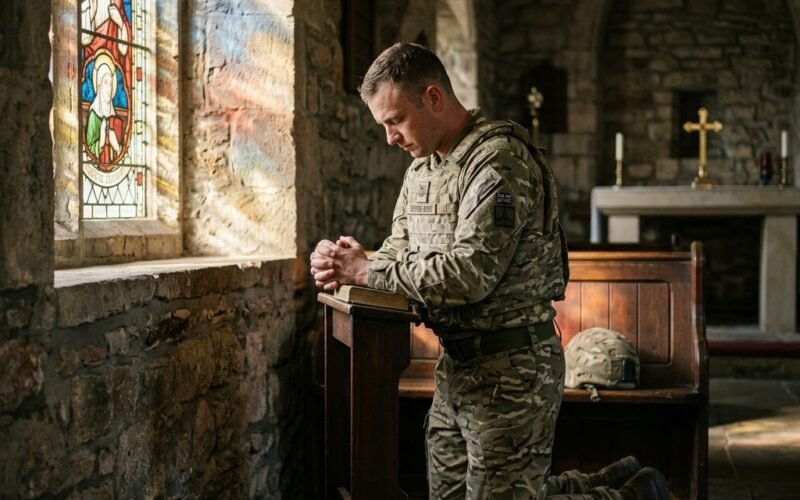
The first step is not willpower; it is honesty. Jesus said plainly, “Apart from me you can do nothing” (John 15:5, ESV). This is not a rebuke—it is an invitation. When we stop pretending we have reserves we do not have, we create space for God’s strength to enter. Cast your specific burden on him in prayer. Name it. Do not spiritualize it into abstraction.
2. Present a Willing Heart, Not a Passive One
Trust is not the same as resignation. Scripture calls us to an active, cooperative faith. “For the eyes of the Lord run to and fro throughout the whole earth, to give strong support to those whose heart is blameless toward him” (2 Chron. 16:9, ESV). God is actively searching for hearts that are unreservedly turned toward him. Offer him yours—even if it is trembling, even if it is confused. Job’s radical declaration becomes our own: “Though he slay me, I will hope in him” (Job 13:15, ESV).
3. Let the Community of Faith Carry You
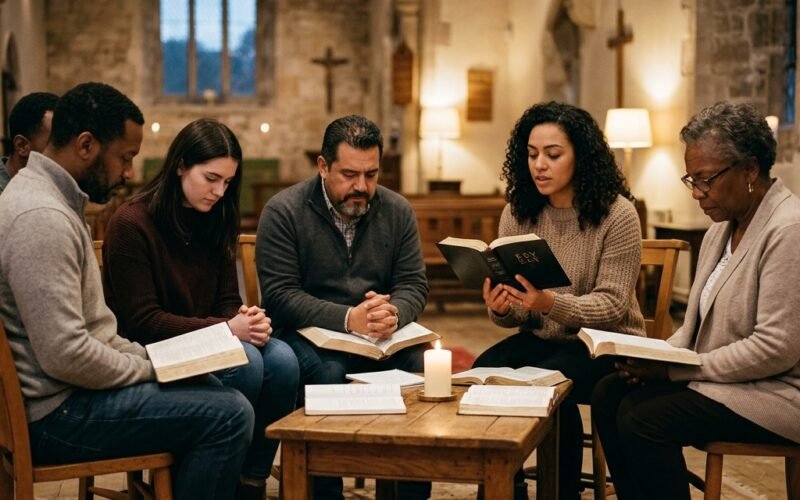
Paul did not endure his affliction alone. He explicitly asked the Corinthians to pray for him, and he credited their intercession with his deliverance (2 Cor. 1:11). Suffering was never meant to be a solitary classroom. The body of Christ is one of God’s primary instruments of comfort. Allow others to pray, to show up, to sit with you in the dark. And when your season of suffering passes, become that presence for someone else.
The Gospel: The Only Firm Ground Beneath Our Feet
Every human being stands in need of a foundation that suffering cannot erode. We have all turned from God to self-sufficiency—that is the essence of sin (Isa. 53:6). We have all tried to build our lives on our own strength, and we have all felt that ground give way. The good news of Jesus Christ is that God did not leave us to collapse.
In his love, the Father sent his Son to live the life we could not live, die the death we deserved, and rise from the grave as the firstfruits of a new creation. “For God so loved the world, that he gave his only Son, that whoever believes in him should not perish but have eternal life” (John 3:16, ESV). This is not a cliché—it is the hinge of history. To repent is to turn from self-trust and toward Christ. To believe is to stake your life on the God who raises the dead.
If you are suffering today, you are not in the wrong place. You may be in the very place where God does his deepest work. The same God who raised Jesus from the dead is present with you right now—not to explain your pain away, but to meet you in it, to build in you a trust that no circumstance can finally destroy, and to carry you toward a glory that will make every present suffering seem, in C. S. Lewis’s phrase, like a severe mercy.
Come to him. He raises the dead.