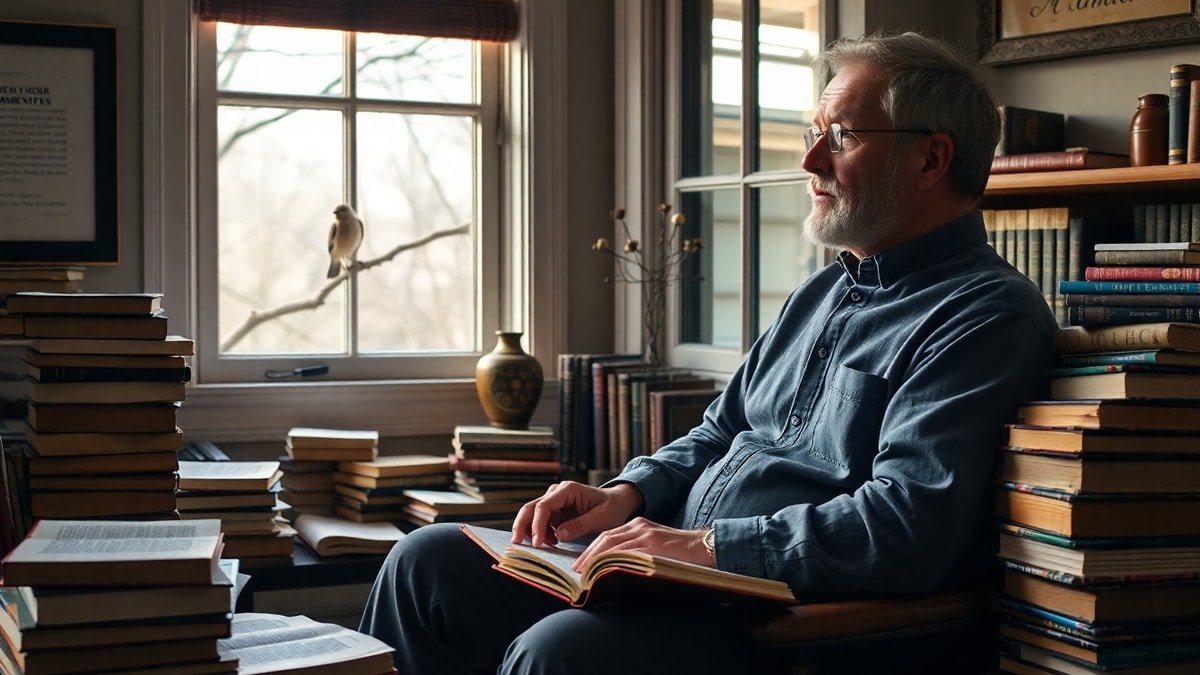
There is a quiet revolution that happens in the lives of faithful Christians, and it rarely makes headlines. It happens in the margins of worn paperbacks, in the lamplight of a home study nook, in the dog-eared pages of a Puritan prayer book pulled from the shelf at midnight. It is the slow, steady work of formation—the shaping of a soul by the words it chooses to dwell in.
Pastor Kevin Burrell of StoneBridge Church Community in Charlotte, North Carolina, recently offered a rare and generous window into this kind of interior life. In a wide-ranging interview about his reading habits, his pastoral philosophy, and his practice of birdwatching as theological reflection, Burrell models something the church desperately needs: the conviction that how we read, what we read, and why we read are not incidental to discipleship—they are discipleship. Read the source article to hear Burrell’s full reflections.
The Problem Beneath the Bookshelf
Before we can appreciate what faithful reading offers us, we must be honest about what we bring to the page. Scripture does not flatter the human heart. The prophet Jeremiah delivers a diagnosis that cuts to the bone:
“The heart is deceitful above all things, and desperately sick; who can understand it?” (Jeremiah 17:9, ESV)
We are not neutral readers. We come to every book—and to every sermon, every prayer, every conversation—with desires already in motion, loves already partially formed, loyalties already quietly pledged. The question is never whether something is shaping us. The question is always what is shaping us.
The Apostle Paul understood this. Writing to the church in Rome, he urged believers not to be “conformed to this world, but be transformed by the renewal of your mind” (Romans 12:2, ESV). The Greek word for conformed here—syschēmatizō—carries the image of being pressed into a mold. Culture, habit, entertainment, and yes, the books we consume, are all pressing on us constantly. The question Paul raises is whether we are being pressed into the shape of the age or into the shape of Christ.
Burrell puts his finger on this same tension when he reflects on James K. A. Smith’s You Are What You Love, which he calls “a seriously important book for pastors.” He observes that pastoral experience reveals “a lot more brokenness in people’s desires than in their knowledge base. They know their Bibles and their theology; they simply want other things more than they want Jesus.” This is not merely a pastoral problem. It is the human problem, rooted in the fall and running through every generation.
Christ, the More Beautiful Song
The gospel does not simply inform our minds—it reorders our loves. This is the stunning claim of the New Testament, and it rests entirely on the person and work of Jesus Christ. The Son of God did not come merely to correct our theology. He came to rescue our hearts.
Paul writes to the Corinthians that “the love of Christ controls us, because we have concluded this: that one has died for all, therefore all have died; and he died for all, that those who live might no longer live for themselves but for him who for their sake died and was raised” (2 Corinthians 5:14–15, ESV). The resurrection of Jesus is not only a historical fact to be believed—it is a gravitational force that pulls the whole orientation of a life in a new direction. When we truly grasp what Christ has done, our desires begin, slowly and sometimes painfully, to realign.
Burrell captures this beautifully when he describes the goal of pastoral ministry as presenting “Jesus as the more beautiful song to subdue our competing idols.” This is not moralism. It is not a self-improvement program. It is the ancient Christian conviction that beholding the glory of Christ—through Scripture, through prayer, through story, through the created world—actually changes what we want. As Paul writes elsewhere, “we all, with unveiled face, beholding the glory of the Lord, are being transformed into the same image from one degree of glory to another” (2 Corinthians 3:18, ESV). Formation is not achieved; it is received, as we keep our eyes fixed on Jesus.
Living It Out: Practices of a Formed Life
So what does it look like, practically, to pursue this kind of gospel-shaped formation? Burrell’s reading life suggests several disciplines worth adopting.
1. Read Widely, but Read Purposefully
Burrell divides his reading by location—novels at the nightstand, Christian growth books in the study nook, ministry resources at the church office. This is not mere organization. It reflects an intentional posture: different kinds of reading serve different dimensions of the soul. Fiction cultivates imagination and empathy; theology deepens understanding; devotional literature trains the affections. “The law of the LORD is perfect, reviving the soul” (Psalm 19:7, ESV), and the whole created order—including great literature—can serve as a signpost back to that law.
2. Reread What Has Stirred Your Heart
Burrell confesses that he once considered life too short to read the same book twice. Age has corrected him. He returns again and again to Tolkien, Lewis, and Victor Hugo—not for information, but for formation. There is wisdom here. The Psalms themselves are a book meant to be returned to, prayed again, sung again. “I have stored up your word in my heart, that I might not sin against you” (Psalm 119:11, ESV). Repetition is not a sign of intellectual poverty; it is the ancient practice of meditatio—letting truth sink from the head to the heart.
3. Let Prayer Expand Your Vocabulary Before God
Burrell describes the Valley of Vision Puritan prayers as giving him “a better bucket to draw deeper from the well.” This is a profound image. Our natural prayers tend to circle the same familiar shallows. The prayers of those who have walked with God through centuries of suffering and joy teach us to bring more of ourselves—and more of God’s greatness—into the conversation. “Let the words of my mouth and the meditation of my heart be acceptable in your sight, O LORD, my rock and my redeemer” (Psalm 19:14, ESV).
4. Look Up—the Creation Is Preaching
Burrell’s blog, Ornitheology, draws theological lessons from the behavior of birds. This is not whimsy; it is deeply biblical.
“The heavens declare the glory of God, and the sky above proclaims his handiwork.” (Psalm 19:1, ESV)
Paul echoes this in Romans: “his invisible attributes, namely, his eternal power and divine nature, have been clearly perceived, ever since the creation of the world, in the things that have been made” (Romans 1:20, ESV). The Christian who learns to read creation as a second book—always subordinate to and interpreted by Scripture—finds that the world is thick with the speech of God.
The Gospel That Makes Reading Matter
None of this—not the books, not the prayers, not the birdwatching—carries any eternal weight apart from the gospel of Jesus Christ. We are sinners, every one of us, whose desires have been bent away from God since the fall. We cannot read our way to righteousness, pray our way to pardon, or think our way to new birth. We need a Savior.
And we have one. Jesus Christ, the eternal Son of God, took on human flesh, lived the life of perfect obedience we could never live, and went to the cross to bear the full weight of our sin and rebellion. He rose from the dead on the third day, defeating death and securing eternal life for all who trust in him. “For God so loved the world, that he gave his only Son, that whoever believes in him should not perish but have eternal life” (John 3:16, ESV).
It is this gospel that gives our reading, our praying, and our living their ultimate meaning. Burrell describes his daily practice of coming to God and confessing, “Lord, to whom shall we go? You have the words of eternal life” (John 6:68, ESV). That is the posture of a disciple—not one who has arrived, but one who keeps returning, day after day, to the only One who can truly form us into something new. If you have never made that return yourself, today is the day. Repent, believe, and find in Jesus the more beautiful song your heart has always been searching for.