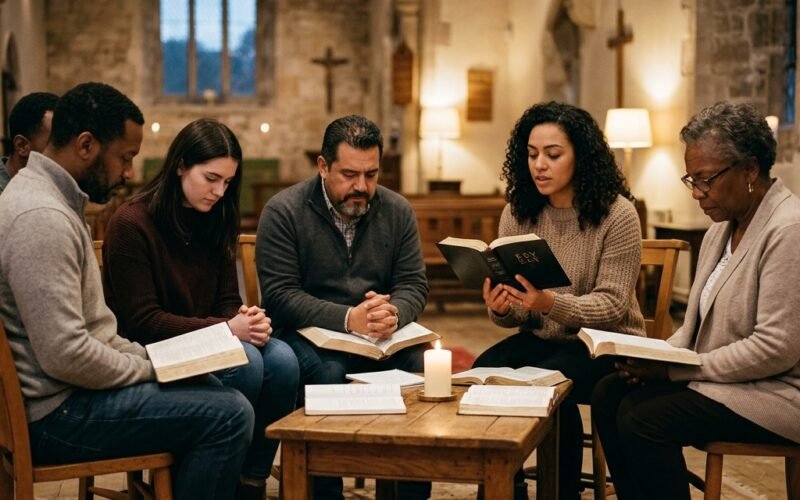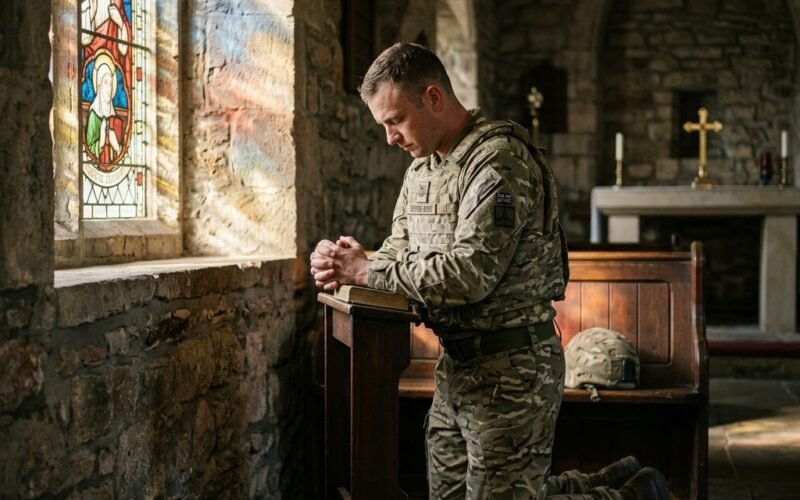
There is a quiet anxiety that settles over many sincere believers when the conversation turns to spiritual growth. Am I doing enough? Am I doing it right? The bookstore shelves and podcast feeds offer elaborate frameworks, personality-based spirituality inventories, and multi-stage programs—each promising the breakthrough we’ve been missing. We begin with excitement, attempt implementation, and then, somewhere around week three, the whole structure collapses under its own weight. We feel not holier, but more defeated.
This is not a new struggle. The people of God have always been tempted to seek complicated paths to what God has made beautifully simple. Read the source article by Matthew C. Bingham, whose work on Reformed spiritual formation challenges us to recover a profound, Scripture-rooted simplicity—not a simplistic faith, but one as elegant and enduring as a plain gold wedding band.
The Human Condition: We Wander from the Word
Before we can appreciate the remedy, we must honestly name the disease. Scripture is unflinching about the human heart’s tendency to drift. The prophet Jeremiah recorded God’s diagnosis centuries ago:
“The heart is deceitful above all things, and desperately sick; who can understand it?” (Jeremiah 17:9, ESV)
Left to ourselves, we do not naturally gravitate toward God. We gravitate toward distraction, self-sufficiency, and spiritual shortcuts. The Apostle Paul makes the same diagnosis in Ephesians, reminding the church that before Christ we were “dead in the trespasses and sins” in which we once walked (Ephesians 2:1, ESV). Spiritual death is not merely moral weakness—it is a fundamental inability to seek God on our own terms. We need not a better program; we need resurrection.
And yet, even after new birth, the regenerate heart still battles the pull of the flesh. Paul describes this tension vividly in Romans 7, crying out, “For I do not do the good I want, but the evil I do not want is what I keep on doing” (Romans 7:19, ESV). The Christian life is not a problem solved at conversion; it is a journey of ongoing formation. The question is not whether we need to grow, but how.
Christ Is the Center, Not the Method
Here is where the gospel reorients everything. Spiritual formation is not primarily about techniques—it is about a Person. Jesus did not come merely to teach us better habits. He came to reconcile us to the Father, to give us His Spirit, and to make us participants in His own resurrection life.
“I am the vine; you are the branches. Whoever abides in me and I in him, he it is that bears much fruit, for apart from me you can do nothing.” (John 15:5, ESV)
The language of abiding is the language of relationship, not regimen. Jesus does not say, “Follow this five-step plan and you will bear fruit.” He says, remain in me. Every genuine spiritual discipline—Bible reading, meditation, prayer, worship, community—is simply a means of remaining connected to the Vine. The fruit is His; the abiding is ours.
The Apostle Paul reinforces this Christ-centeredness when he writes that we are being “transformed into the same image from one degree of glory to another” (2 Corinthians 3:18, ESV). The image we are being conformed to is the image of Christ. Formation is not self-improvement—it is Spirit-wrought Christlikeness. This is why Paul can also say, “Work out your own salvation with fear and trembling, for it is God who works in you, both to will and to work for his good pleasure” (Philippians 2:12–13, ESV). We work because God works. Our effort is the fruit of His grace, not the root of it.
The Reformation Triangle: A Time-Tested Path
So what does this look like on an ordinary Tuesday morning? Bingham draws from the deep wells of Reformation and Puritan spirituality to offer what he calls the Reformation Triangle: three disciplines that are simple, interconnected, and daily.
1. Take In God’s Word
The psalmist declares, “Your word is a lamp to my feet and a light to my path” (Psalm 119:105, ESV). We cannot walk faithfully in the dark. Daily engagement with Scripture—whether a full chapter, a single psalm, or even a proverb—is not optional for the growing Christian. It is the oxygen of the spiritual life. The goal is not to consume maximum volume but to encounter the living God who speaks through His Word.
2. Meditate Deeply
Reading and meditating are not the same thing. Joshua was commanded not merely to read the Law but to meditate on it “day and night” so that he would be careful to do all that was written (Joshua 1:8, ESV). Meditation is the slow, prayerful pondering that moves truth from the mind to the heart. It asks: How does this verse intersect with my life, my relationships, my fears, my calling today? Write it down. Sit with it. Let it marinate before you move on.
3. Pray It Back to God
Prayer is the natural overflow of Word-saturated meditation. We hear God speak in Scripture; we respond in prayer. This is conversation with the Father made possible by the Son. “Do not be anxious about anything, but in everything by prayer and supplication with thanksgiving let your requests be made known to God” (Philippians 4:6, ESV). When we pray Scripture back to God—confessing what we have read, asking for what we have been promised, lamenting what we have recognized—our prayer life is anchored to reality rather than drifting into vague sentiment.
Living It Out: Starting Small, Staying Faithful
- Start where you are, not where you think you should be. A one-year Bible plan is a gift, not a law. If your season allows only a psalm a day, begin there. Faithfulness in small things is the path to greater capacity (Luke 16:10, ESV).
- Write it down. Journaling a verse or a brief reflection anchors meditation and creates a record of God’s faithfulness over time.
- Let your prayer follow your reading. Before you close your Bible, turn what you have read into a sentence of prayer. This single habit unifies the three disciplines naturally.
- Do it daily, not perfectly. The goal is not a flawless streak but a consistent direction. Grace covers the missed mornings; the Spirit renews the resolve.
The Gospel That Makes Formation Possible
None of this is possible apart from the gospel. We do not read, meditate, and pray in order to earn God’s favor—we do so because, in Christ, we already have it. Every human being stands before a holy God with a debt of sin we cannot pay. But God, being rich in mercy, sent His Son Jesus Christ to live the life we could not live and to die the death our sin deserved. On the cross, Christ bore the full weight of divine judgment. On the third day, He rose from the dead, defeating sin and death, and opening the way to the Father for all who trust in Him.
“For by grace you have been saved through faith. And this is not your own doing; it is the gift of God, not a result of works, so that no one may boast.” (Ephesians 2:8–9, ESV)
If you have never turned from your sin and trusted Christ, that is the first and most urgent step—not a spiritual discipline program, but repentance and faith. And if you are already in Christ, every morning you open your Bible and bow your knee in prayer is an act of gratitude to the One who has already secured your eternity. The simple triangle of Word, meditation, and prayer is not a ladder we climb to God—it is the path we walk with Him, in the freedom He has already won.
Come to Him. Stay close. He is enough.