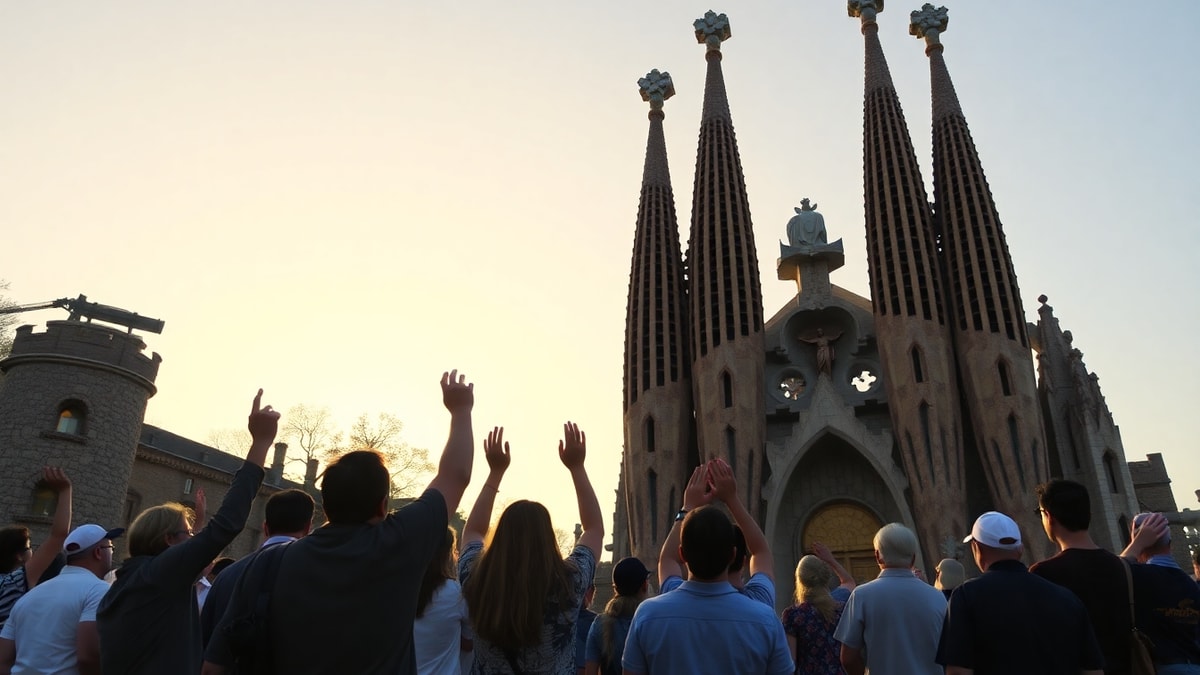
When the world’s tallest church tower is raised, it is easy to marvel at stone and light. Yet the true wonder lies not in height, but in the message it proclaims: a God who lifts humanity out of war, suffering, and despair. In a time when headlines are filled with conflict, the recent blessing of the Sagrada Família’s central tower by Pope Leo XIV invites believers to ask how the gospel speaks to the brokenness around us.
What Scripture Says About War and Human Suffering
“If possible, so far as it depends on you, live peaceably with all.” (Romans 12:18)
Paul’s admonition to the Romans captures the tension of the Christian life: we are called to live in peace, yet the world often pulls us into conflict. The biblical diagnosis of humanity’s condition is stark. Genesis records the first act of violence when Cain murders his brother (Genesis 4:8), and the flood narrative shows how far sin had corrupted creation (Genesis 6‑9). Jeremiah laments the consequences of a people who “have turned away from me” (Jeremiah 2:13), leading to wars that devastate families and nations.
These passages reveal a pattern: sin births violence, and violence deepens sin. The apostle John warns that “the world is passing away in its desire for what is not of God” (1 John 2:15), underscoring the futility of human power when it is divorced from the divine purpose of love.
Jesus, the Prince of Peace, Answers the Cry
“For to us a child is born, to us a son is given; and the government will be upon his shoulders. And his name will be called Wonderful Counselor, Mighty God, Everlasting Father, Prince of Peace.” (Isaiah 9:6)
From the prophetic promise of Isaiah to the incarnation of Christ, the gospel offers a decisive answer to the problem of war. Jesus Himself declared, “Peace I leave with you; my peace I give to you. Not as the world gives do I give to you. Let your hearts be troubled no more.” (John 14:27). His life modeled non‑violent resistance: He turned the other cheek (Matthew 5:39) and taught his disciples to love their enemies (Matthew 5:44).
The crucifixion and resurrection turn the narrative of violence on its head. On the cross, the ultimate act of war—humanity’s rebellion against God—was met with divine love. “But God shows his love for us in that while we were still sinners, Christ died for us” (Romans 5:8). The risen Lord commissions us to be peacemakers, not soldiers of earthly kingdoms (Matthew 5:9).
Living Out the Gospel in a Turbulent World
Related Reading: See how living out faith requires courage in our article on defending truth in service, and explore the beauty of holiness in our piece on the Tabernacle and Christ. For parents seeking to guide children, read Stories of Grace.
1. Pray for Peace with Persistent Faith
- Follow the example of the early church, gathering daily to pray for the “peace of the city” (Acts 2:46‑47).
- Make intercessory prayer for victims of war a regular part of your devotions, echoing the Psalmist’s cry, “Hear my prayer, O Lord, give ear to my pleas for mercy!” (Psalm 86:1).
2. Speak Truth with Love, Not Aggression
- When conversations turn to politics or conflict, echo Paul’s instruction: “Speak the truth in love” (Eph 4:15).
- Offer a biblical perspective that points to the kingdom of God, not merely to nationalistic agendas.
3. Build Community as the Church’s Visible Peace
- Invite neighbors, especially those displaced by war, into your home for a shared meal, reflecting the hospitality of the early believers (Heb 13:2).
- Support ministries that provide shelter, medical aid, and counseling to refugees, embodying Christ’s command to “love your neighbor as yourself” (Mark 12:31).
The Gospel Proclaimed
“For all have sinned and fall short of the glory of God, and all are justified freely by his grace through the redemption that came by Christ Jesus.” (Romans 3:23‑24)
Humanity’s brokenness—war, hatred, abandonment—stems from sin. Yet the gospel offers a remedy that the Sagrada Família’s tower points toward: the cross of Jesus, the ultimate symbol of love that conquers violence. By trusting in Christ’s sacrificial death and victorious resurrection, we receive forgiveness, a new identity, and the power to be agents of peace.
May the towering stone of Jesus inspire you to lift up the cross in your own life, to pray fervently for peace, and to live out the gospel’s call to love in a world that desperately needs the light of Christ.