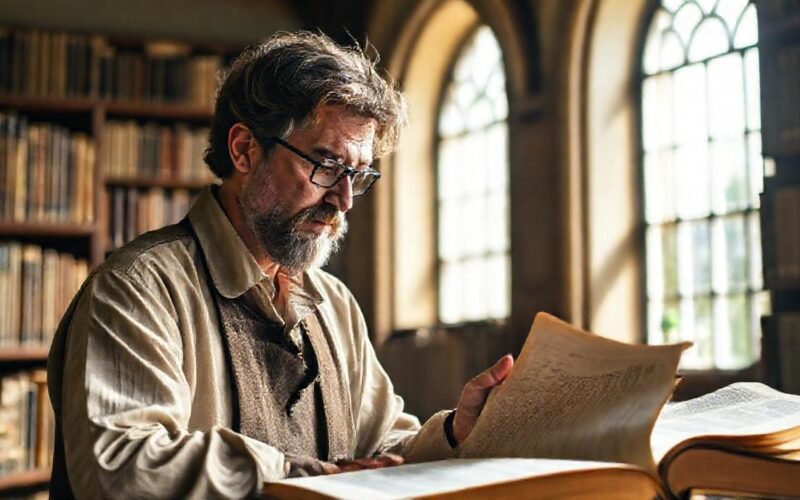
We live in an age characterized by fragmented attention, fleeting pixels, and relentless digital noise. In classic dystopian fiction, authors warned of authoritarian regimes that burned libraries and outlawed the written word to suppress human contemplation. Today, the crisis before us is far quieter yet profoundly consequential: our society has not burned its books; it has simply ceased reading them. In an insightful examination of this cultural shift, Kathryn Butler explores how digital fragmentation threatens our spiritual depth (Read the source article). For the Christian disciple, literacy is never a mere intellectual pastime or cultural preference; God chose to bind His self-revelation to the written word so that His people might know Him and revere His covenant throughout every generation (Deuteronomy 17:19).
When the Apostle Paul exhorted his young disciple Timothy to safeguard the health of the local church, he emphasized the primacy of the written text: “Until I come, devote yourself to the public reading of Scripture, to exhortation, to teaching” (1 Timothy 4:13). The preservation of reading is deeply woven into the fabric of Christian worship, theological fidelity, and spiritual vitality.
“Until I come, devote yourself to the public reading of Scripture, to exhortation, to teaching.” — 1 Timothy 4:13
The Biblical Diagnosis: Distraction and the Drifting Heart
Why does sustained, contemplative reading feel increasingly arduous to modern minds? While neuroscientists point to the rewiring of neural pathways under the barrage of short-form videos and push notifications, Scripture reveals a deeper, spiritual reality concerning the human mind. The Apostle Paul commands believers, “Do not be conformed to this world, but be transformed by the renewal of your mind, that by testing you may discern what is the will of God, what is good and acceptable and perfect” (Romans 12:2). When our interior lives are shaped by the hurried ephemera of the surrounding culture, our capacity to discern divine truth becomes dangerously dulled (Jeremiah 17:9).
The fallen human condition inherently tends toward vanity and immediate gratification rather than patient meditation on eternal matters. The author of Ecclesiastes observed this restless pursuit: “Vanity of vanities, says the Preacher, vanity of vanities! All is vanity” (Ecclesiastes 1:2). When we surrender deep contemplation to momentary soundbites, we become vulnerable to spiritual instability, tossed to and fro by human cunning and shifting cultural dogmas (Ephesians 4:14).
Furthermore, Scripture diagnoses the spiritual peril of mental neglect, warning against living “in the futility of their minds” as those who are “darkened in their understanding, alienated from the life of God because of the ignorance that is in them” (Ephesians 4:17–18). Disciples are not called to drift passively along the prevailing currents of our age; rather, we are commanded to set our minds on things above, where Christ is seated at the right hand of God (Colossians 3:2).
“Do not be conformed to this world, but be transformed by the renewal of your mind, that by testing you may discern what is the will of God, what is good and acceptable and perfect.” — Romans 12:2
Christ, the Eternal Word Made Flesh
Our call to be people who read, ponder, and cherish words rests upon the supreme revelation of God in Jesus Christ. God did not disclose His redemption through erratic visual spectacles; He spoke, and His ultimate self-disclosure arrived in a Person who is Himself the Living Word. As the Apostle John declares: “In the beginning was the Word, and the Word was with God, and the Word was God… And the Word became flesh and dwelt among us, and we have seen his glory, glory as of the only Son from the Father, full of grace and truth” (John 1:1, 14).
The Epistle to the Hebrews anchors our confidence in this decisive, historical revelation: “Long ago, at many times and in many ways, God spoke to our fathers by the prophets, but in these last days he has spoken to us by his Son, whom he appointed the heir of all things, through whom also he created the world” (Hebrews 1:1–2). Jesus is the radiance of God’s glory and the exact imprint of His nature, holding all things together by the word of His power (Hebrews 1:3). In Christ, the invisible God is made visible, displaying the boundless wisdom through which the universe was fashioned and redeemed (Colossians 1:15–17).
Because Jesus is the incarnate Word, the written Scriptures bear unified witness to His saving work. In Him “are hidden all the treasures of wisdom and knowledge” (Colossians 2:3). When we neglect the discipline of reading the written Word, we impair our ability to behold the glories of the living Savior who declared that man shall not live by bread alone, but by every word that comes from the mouth of God (Matthew 4:4).
“In the beginning was the Word, and the Word was with God, and the Word was God… And the Word became flesh and dwelt among us, and we have seen his glory, glory as of the only Son from the Father, full of grace and truth.” — John 1:1, 14
Walking Faithfully: Discipleship in a Distracted Generation
Reclaiming a culture of deep reading is not about clinging to intellectual nostalgia; it is an act of spiritual warfare and faithful stewardship. Disciples must deliberately construct rhythms of life that prioritize the written revelation of God over the cacophony of digital devices (Psalm 119:105).
1. Cultivate Sacred Stillness and Scriptural Meditation
True spiritual maturity requires the patience to sit quietly before the text of Scripture without distraction. The Psalmist describes the blessed disciple: “his delight is in the law of the Lord, and on his law he meditates day and night” (Psalm 1:2). We must intentionally establish digital sabbaths, silencing our devices so that our minds may dwell richly upon God’s precepts and fix our eyes upon His ways (Psalm 119:15).
2. Anchor the Christian Home in the Written Word
Parents possess a sacred mandate to form the imaginations and attention spans of the next generation. Moses instructed the people of Israel: “These words that I command you today shall be on your heart. You shall teach them diligently to your children, and shall talk of them when you sit in your house, and when you walk by the way, and when you lie down, and when you rise” (Deuteronomy 6:6–7). By filling our homes with physical books, reading Scripture aloud around the dinner table, and modeling sustained attention, we train our children to love truth and wisdom (Proverbs 22:6).
3. Guard the Local Church as a Haven for the Word
Pastors and church leaders must resist the urge to turn corporate worship into an entertainment-driven presentation of fragmented soundbites. Paul’s charge to the church remains clear: “Preach the word; be ready in season and out of season; reprove, rebuke, and exhort, with complete patience and teaching” (2 Timothy 4:2). When local assemblies dedicate themselves to the verse-by-verse exposition of Scripture and the corporate reading of the Bible, they bear witness to a restless world that “the word of God is living and active, sharper than any two-edged sword” (Hebrews 4:12).
“Blessed is the man who walks not in the counsel of the wicked, nor stands in the way of sinners, nor sits in the seat of scoffers; but his delight is in the law of the Lord, and on his law he meditates day and night.” — Psalm 1:1–2
The Unchanging Gospel: Good News for a Weary World
The urgency to recover the written Word ultimately points us to our deepest human need: reconciliation with our Creator. Scripture reveals that every one of us has rebelled against God, following the foolish desires of our own hearts and falling short of His holiness: “For all have sinned and fall short of the glory of God” (Romans 3:23). Left to our own devices, our spiritual blindness produces death, for “the wages of sin is death, but the free gift of God is eternal life in Christ Jesus our Lord” (Romans 6:23).
Yet the glorious truth of the gospel is that God did not leave us in our condemnation. In love, He sent His Son Jesus Christ to bear our sins upon the cross, suffering the penalty we deserved: “He himself bore our sins in his body on the tree, that we might die to sin and live to righteousness” (1 Peter 2:24). On the third day, Jesus rose bodily from the grave in victory over sin, death, and hell, fulfilling the Scriptures and securing redemption for all who trust in Him (1 Corinthians 15:3–4).
Today, the living Christ calls all people everywhere to repent of their sin, turn away from the empty distractions of this passing age, and place their faith in Him alone (Acts 3:19). “For everyone who calls on the name of the Lord will be saved” (Romans 10:13). In Christ, you are made a new creation, washed by His blood and indwelt by His Holy Spirit (2 Corinthians 5:17). Earthly technologies, empires, and digital trends will inevitably crumble, but the promise of salvation stands secure forever: “All flesh is like grass and all its glory like the flower of grass. The grass withers, and the flower falls, but the word of the Lord remains forever” (1 Peter 1:24–25).